The rise of feminism in the Western world and its gradual transformation into an organized social movement in the 20th century has profoundly influenced societal perceptions of gender and women’s rights. Feminist discourse has penetrated public consciousness, and discussions surrounding gender have become a central theme in the history of art. In modern Chinese art history, notable feminist artists such as Li Xinmo and Wang Shuping have emerged. Their work goes beyond traditional gender binaries and critiques of gender discrimination, offering a structural and cultural analysis of gender dynamics. Clearly, the self-awareness and gender consciousness of contemporary women possess a subversive power.
Since the 1960s, China has made significant strides in elevating women’s social status. Women's labor and voting rights have been constitutionally guaranteed, and Mao Zedong's famous statement, “Women hold up half the sky,” has become a well-known mantra. However, traditional patriarchal values continue to exert a deep and pervasive influence on societal attitudes towards women, shaping their self-perception. Although the constitution stipulates gender equality, it cannot fully address the ingrained societal and psychological inequalities between men and women. In contemporary China, the development of feminism appears to be regressing. Sociologist Li Yinhe noted that during the Mao era, when wages were largely equal between men and women, gender equality seemed more achievable. Since the economic reforms, the rise of private enterprises and cost-driven employment practices have led to discrimination against women who bear child-rearing responsibilities, resulting in a decline in women’s societal status.
Despite these setbacks, feminism in China has sparked significant awareness of gender issues, turning incidents into hotly debated social topics. Media coverage often uses sensationalized terms like "female driver," perpetuating stereotypes such as “female drivers are killers” or “women should stay home and take care of children.” Traditional ideas have also given rise to controversial phenomena like “widowed parenting,” “virtuous wives teaching children,” and even “female virtue training classes.” These, in turn, have inspired counter-discourses such as the satirical slogan, “Remain unmarried and childless to stay safe.” Similarly, social attitudes towards “freedom of dress” have grown more conservative, with women often expected to exude heterosexual charm while simultaneously adhering to restrictive moral codes. This double standard starkly highlights the social tolerance gap regarding male and female desires, fostering pervasive "slut-shaming."
Violations of women’s rights persist, with frequent cases of pregnant women being dismissed from their jobs. In 2018, the #MeToo movement arrived in China, sparking unprecedented discussions and accusations against perpetrators of sexual harassment and assault. However, this momentum faced significant pushback: feminist voices were censored, as in the case of the social media account “Voice of Feminism,” which was permanently banned. High-profile cases like the sexual harassment allegations against renowned CCTV host Zhu Jun ended without resolution. While some claim that “Chinese women are the most liberated in the world,” gender inequality persists, particularly in rural areas where female infanticide has contributed to an increasing gender imbalance. Furthermore, the translation of feminism into Chinese as nüquan (women’s rights) has been stigmatized, morphing into the derogatory term nüquan (“feminist fist”), a homophone that equates advocacy for women’s rights with aggression. Official discourse has framed feminism as ideological conflict, imposing strict limits on discussions of gender and conflict-driven narratives
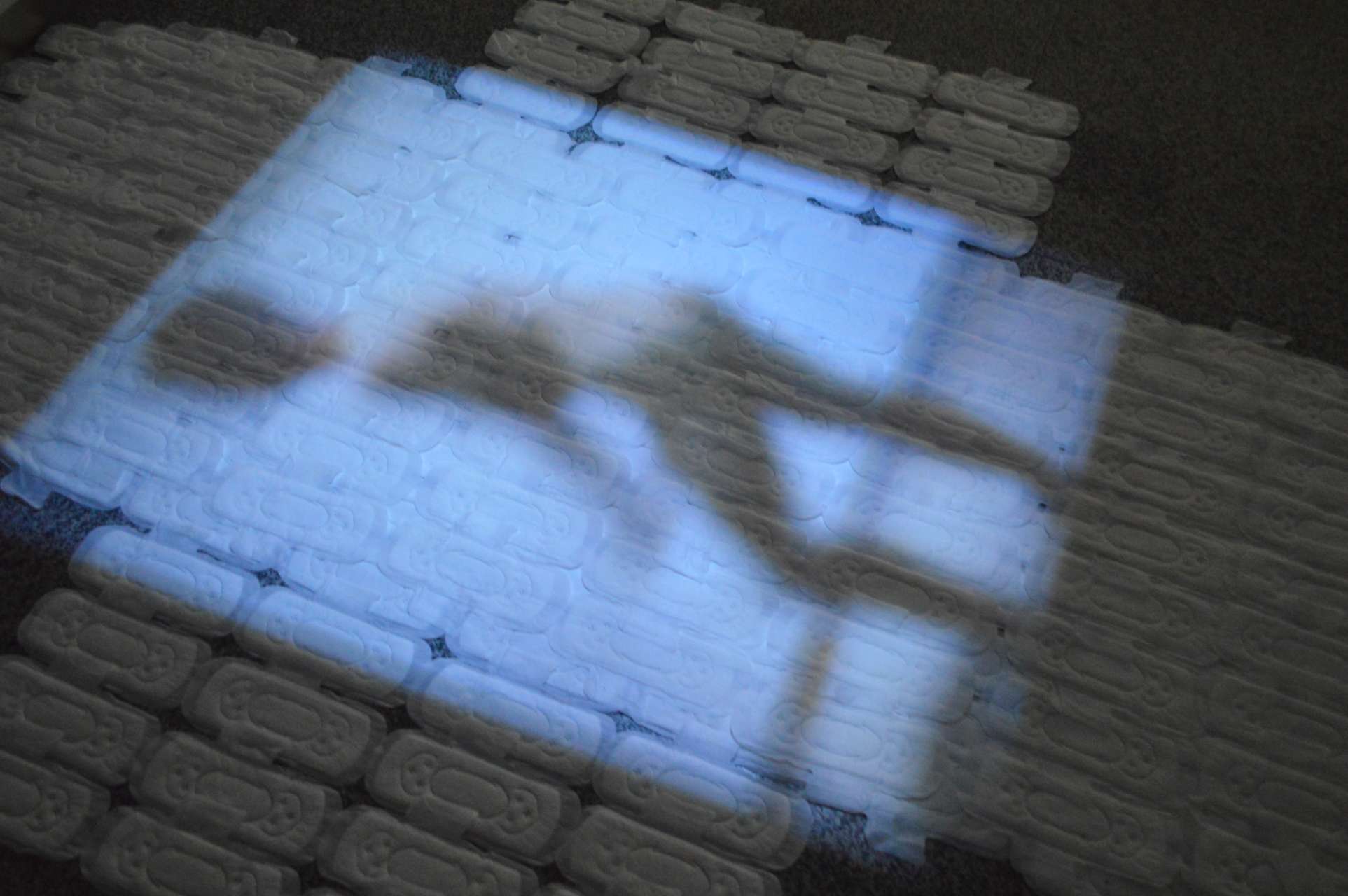
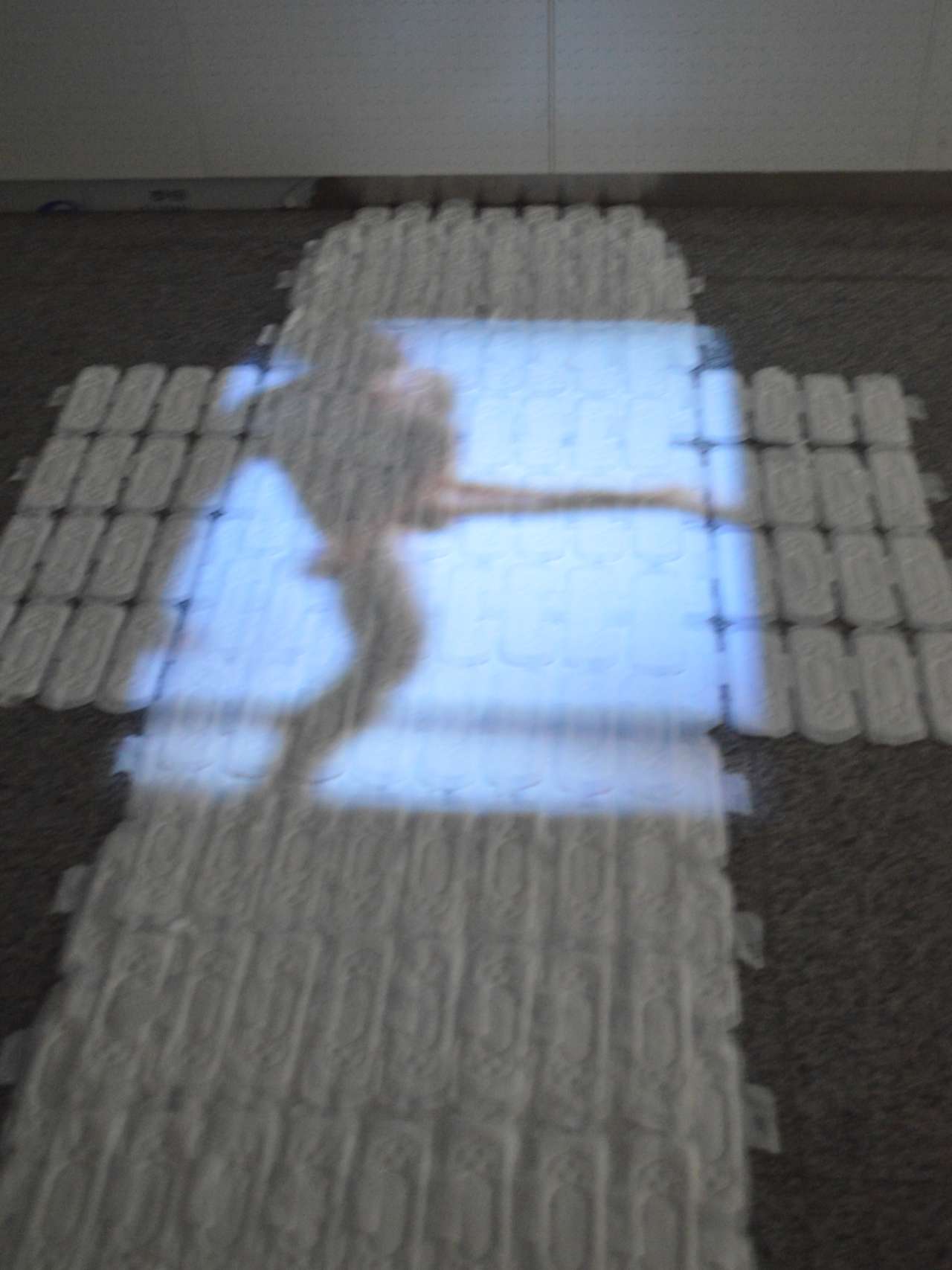
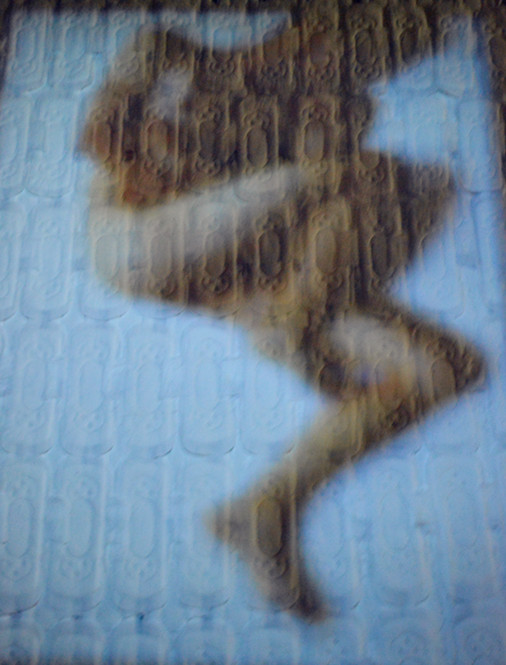
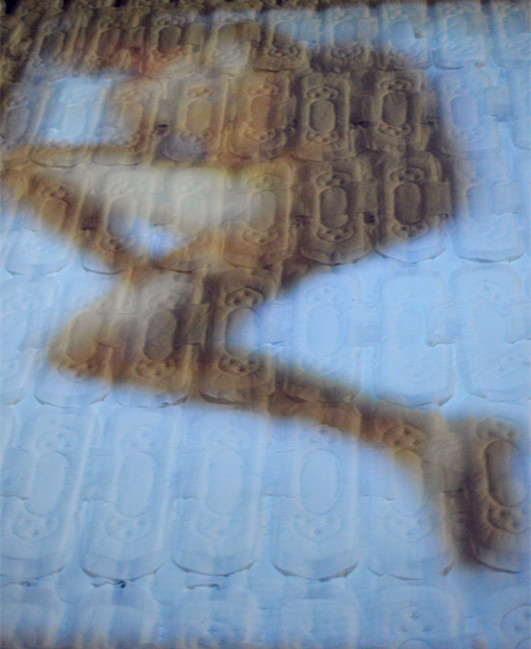
Inspired by this societal backdrop and driven by my observations of the lives of mothers, sisters, and female friends, I created The Shape of Hidden Pain, a work grounded in realism.
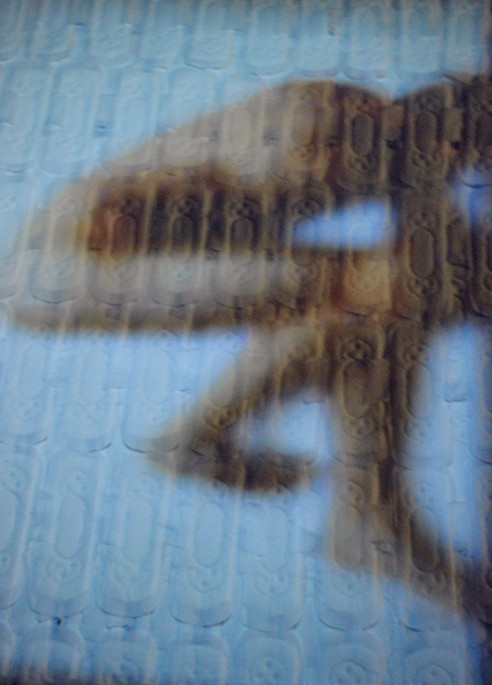
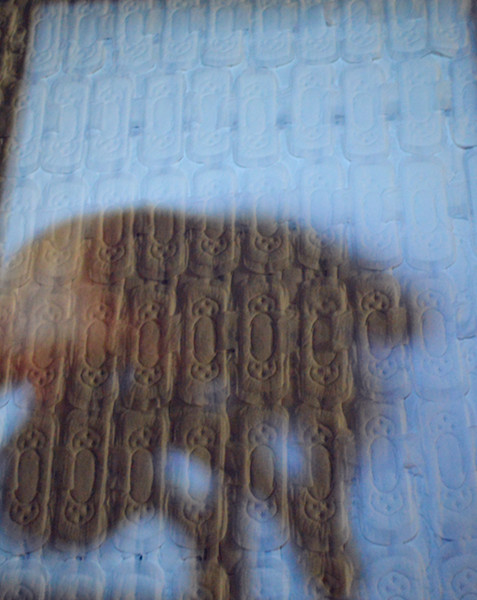
According to Chinese definitions, "hidden pain" refers to deeply personal suffering that one cannot or will not openly express, while "shape" refers to the form or manifestation of an entity. My work uses 365 sanitary pads to cover the ground, symbolizing the persistent and pervasive presence of women's pain—pain experienced every day of the year. As a male artist, I cannot fully comprehend the pain unique to women, such as menstrual cramps, childbirth, pregnancy, workplace discrimination, infidelity, and parenting struggles. To bridge this gap, I invited a nude male model to lie on the pads, assuming poses that convey various forms of psychological distress from a male perspective. This act represents a role reversal, allowing the male body to confront the physical and emotional experiences of women, highlighting the necessity and relevance of feminism.
The performance challenges patriarchal constructs of gender roles and stereotypes. While male bodies are often associated with strength, resilience, and aggression, female bodies are perceived as graceful, nurturing, and, at times, tragic. By placing a male body within a female-centric narrative, the work intensifies its visual and emotional impact, provoking deeper reflection and discussion. It directly challenges the notion of women as passive objects to be observed, disrupting the conventional aesthetic of “soft” or “harmonious” female subjects often found in traditional art.
The monochromatic palette of the work—flesh tones and white—emphasizes the stark reality of women’s pain. The clear texture of the sanitary pads and the vivid representation of human suffering create a tangible, three-dimensional manifestation of hidden pain. This simplicity strips away distractions, allowing the viewer to confront the rawness and immediacy of the subject matter.
Through my engagement with feminism, I have been deeply moved by the strength and courage of ordinary women. Their advocacy for survival rights, life choices, and perspectives on love and marriage reflects immense bravery and resilience. While men and women are inherently different, I believe that supporting feminism includes extending greater care and convenience to women. If that is not possible, then at the very least, they deserve respect. If showing care for women is deemed politically incorrect, I am willing to be wrong.