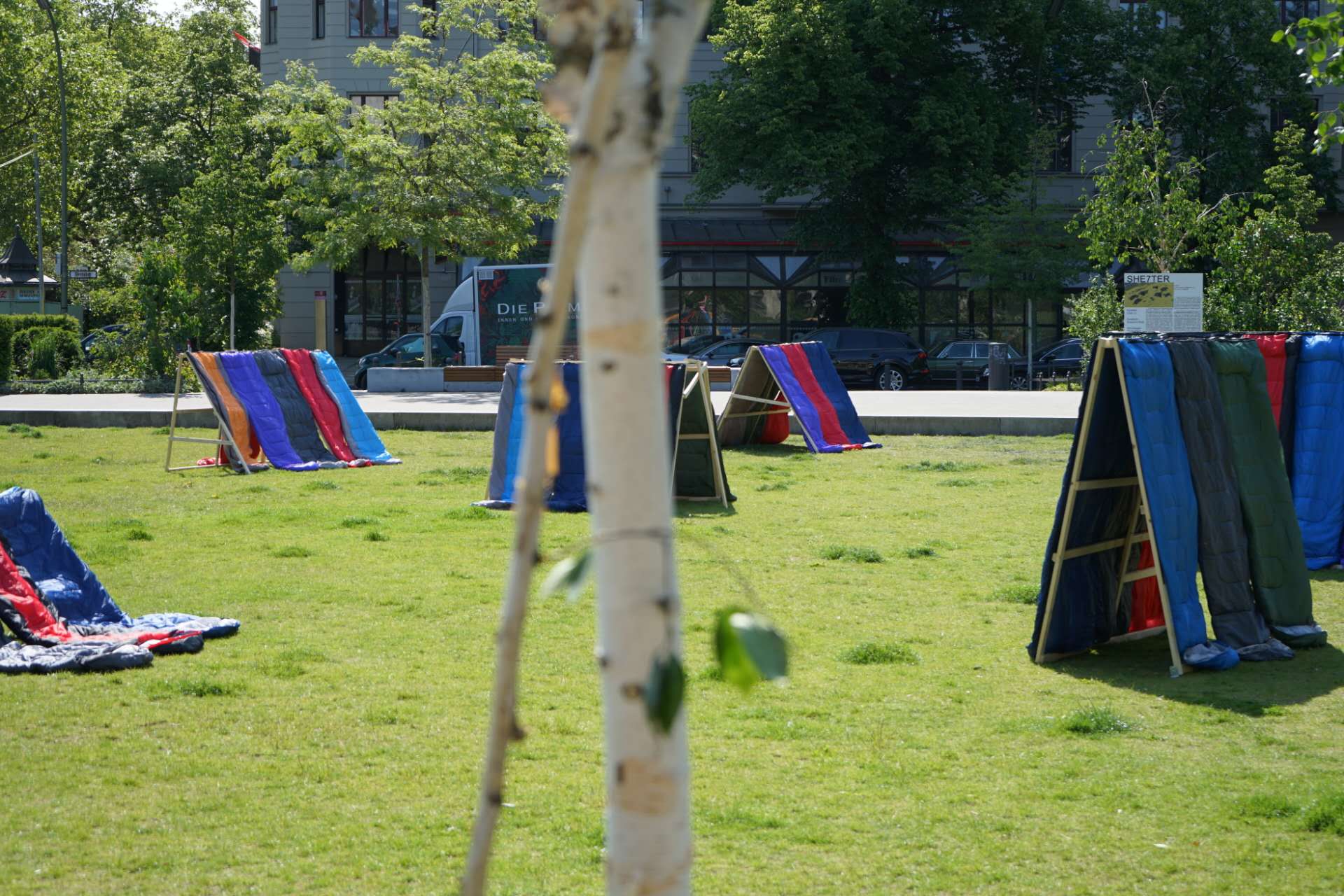
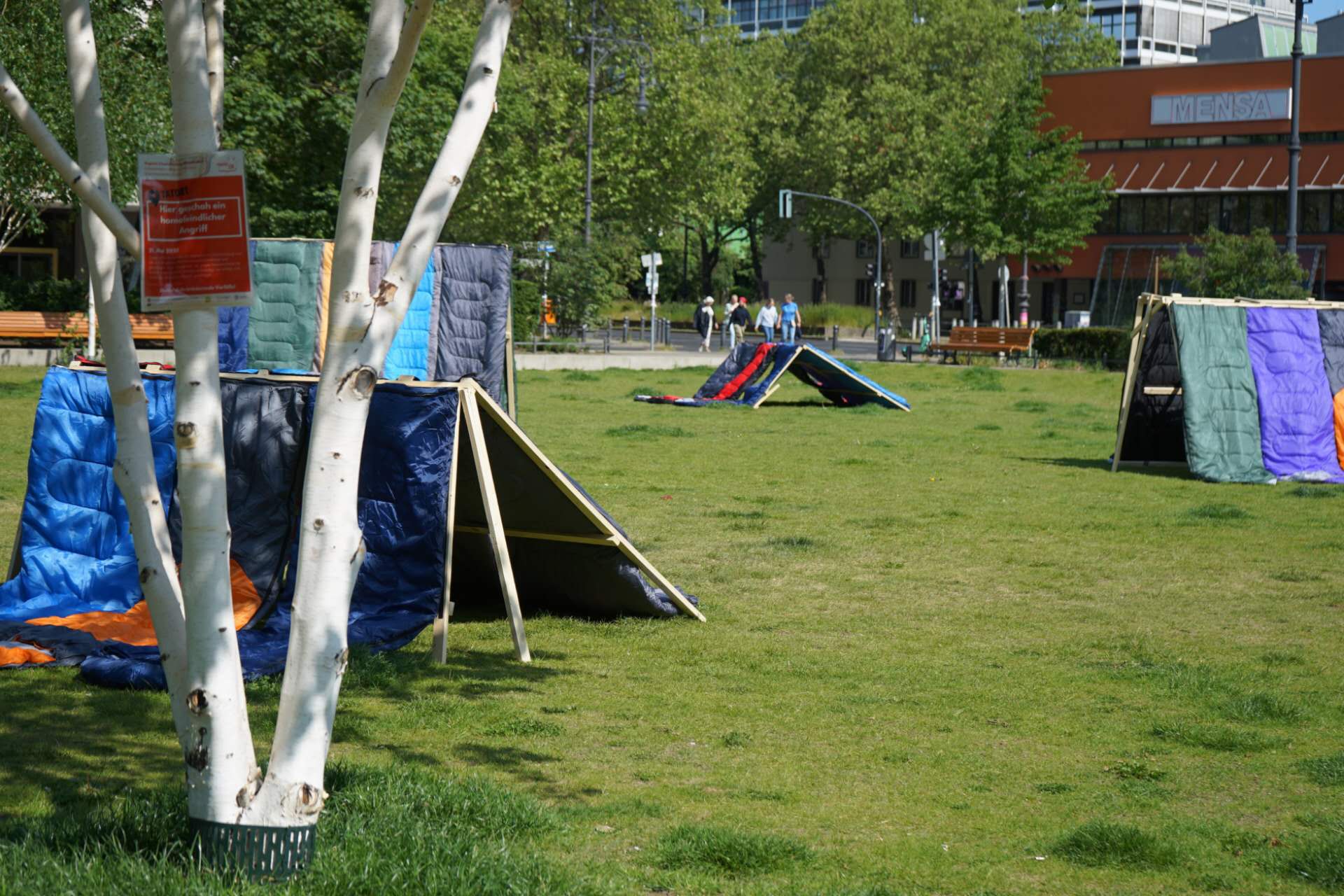
SHE7TER is an interdisciplinary public art installation addressing the social marginalization of homeless individuals and beggars in urban spaces. The work responds to escalating social tensions exacerbated by the energy crisis, the lasting impacts of global epidemics, and the Russian-Ukrainian war. It reflects the precarious living conditions of these groups, particularly in light of an impending extremely cold winter, as forecasted by scientists.
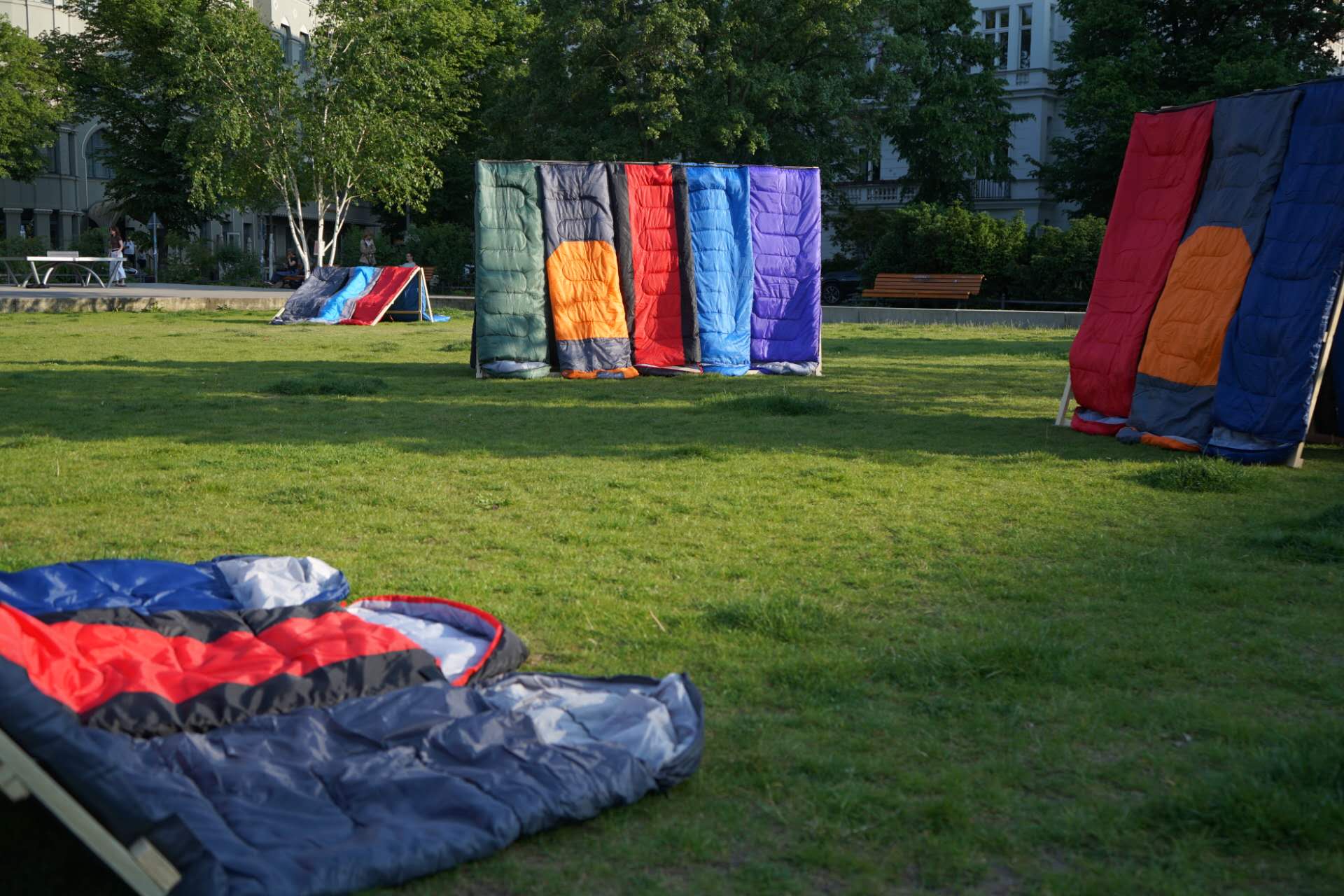
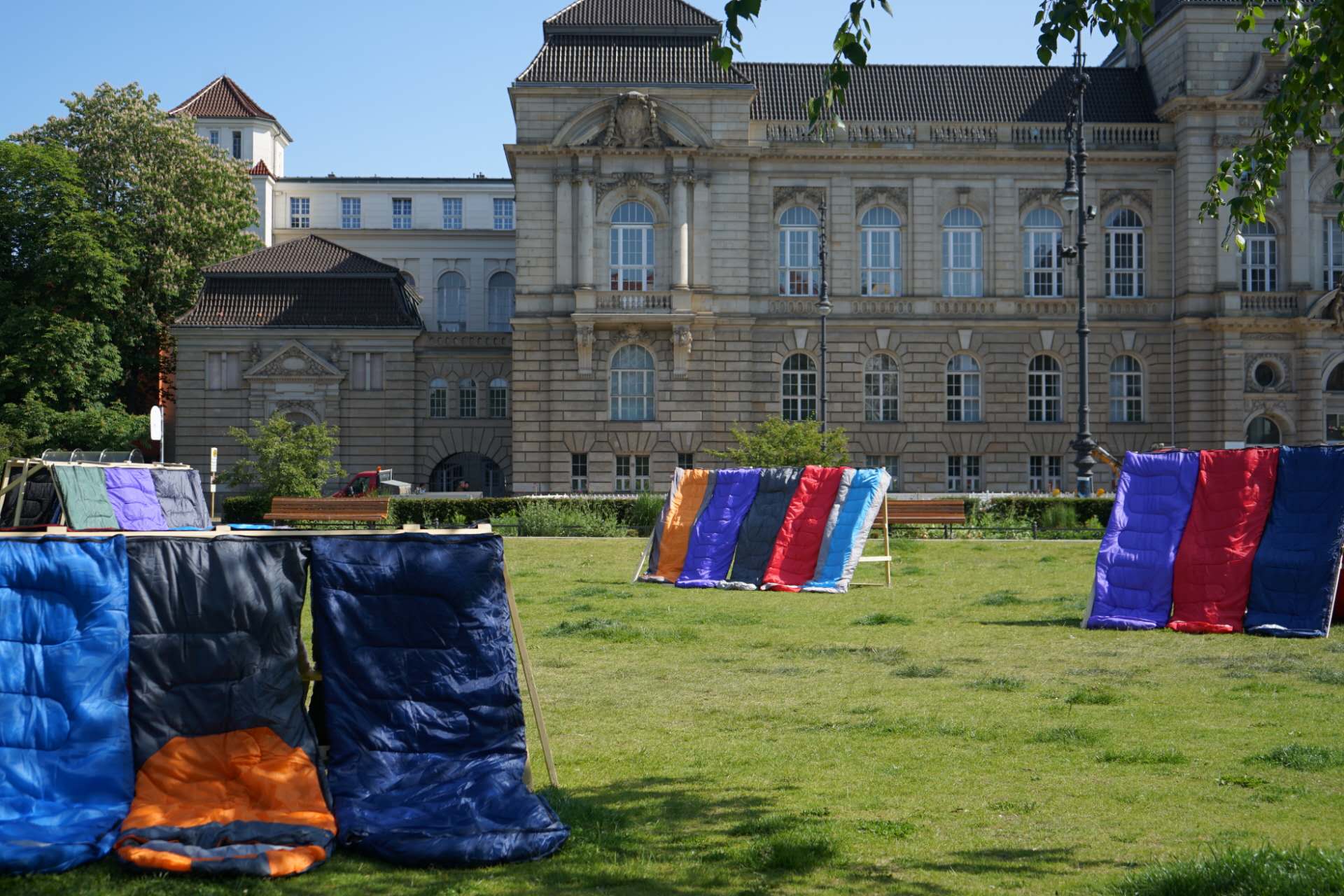
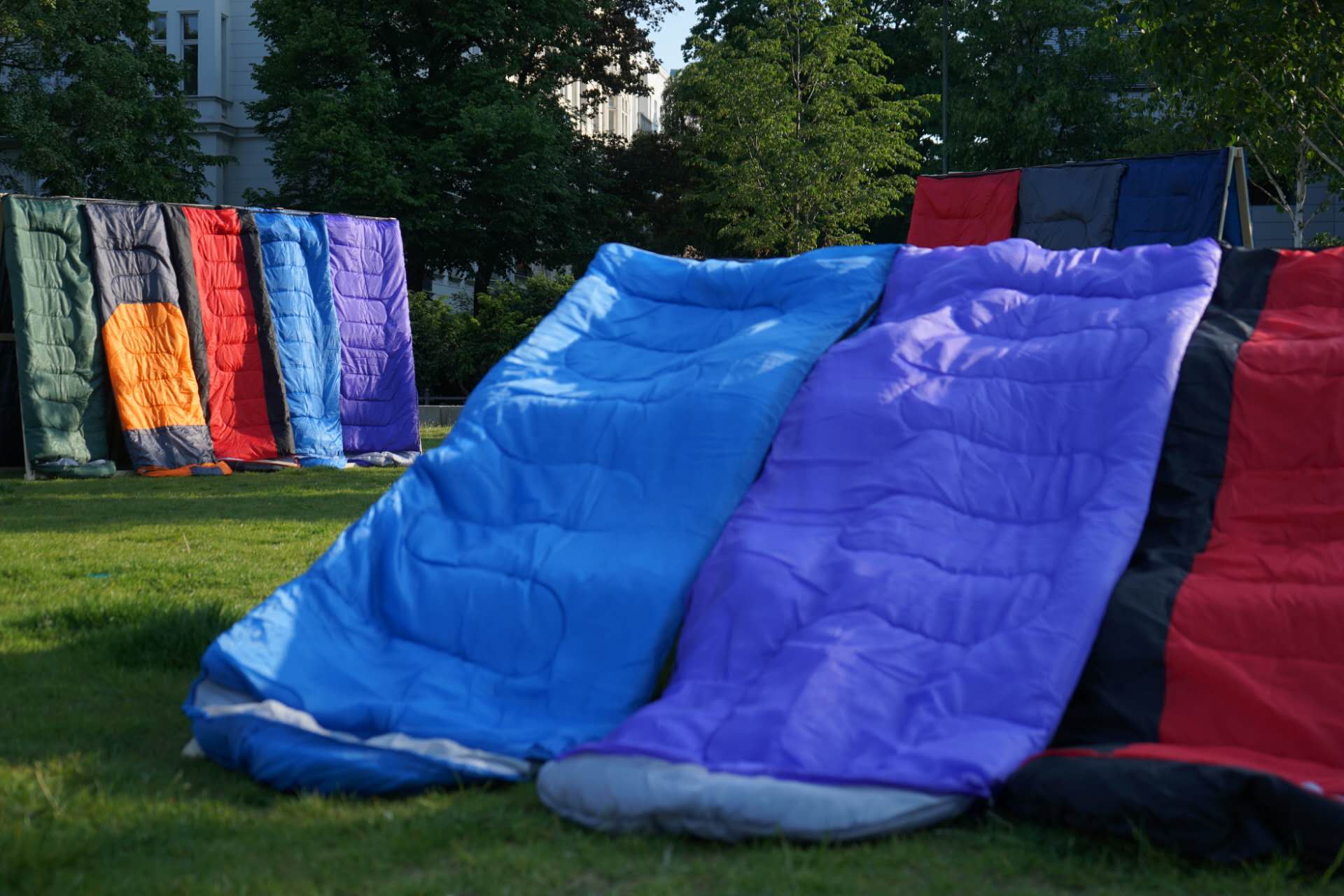
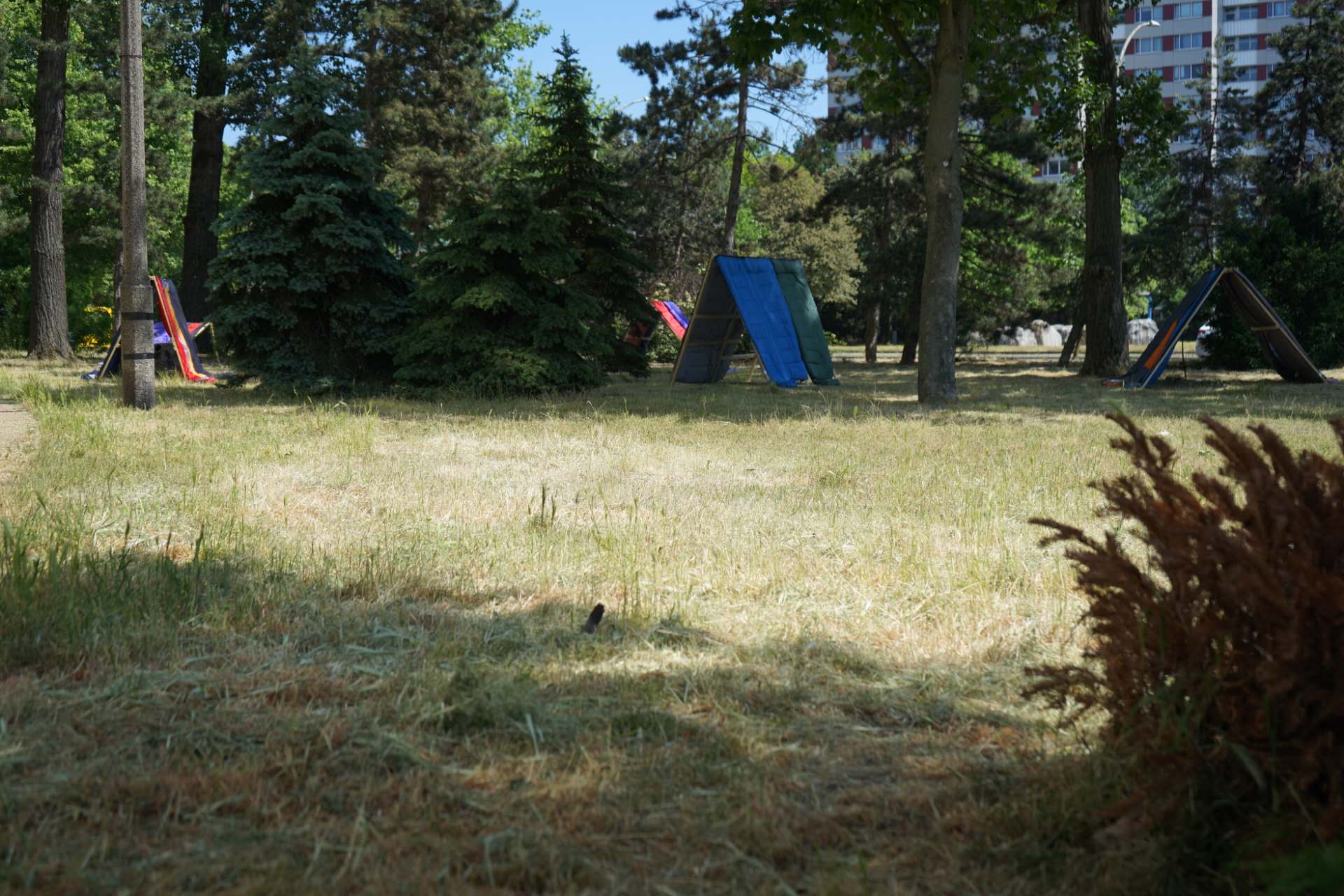
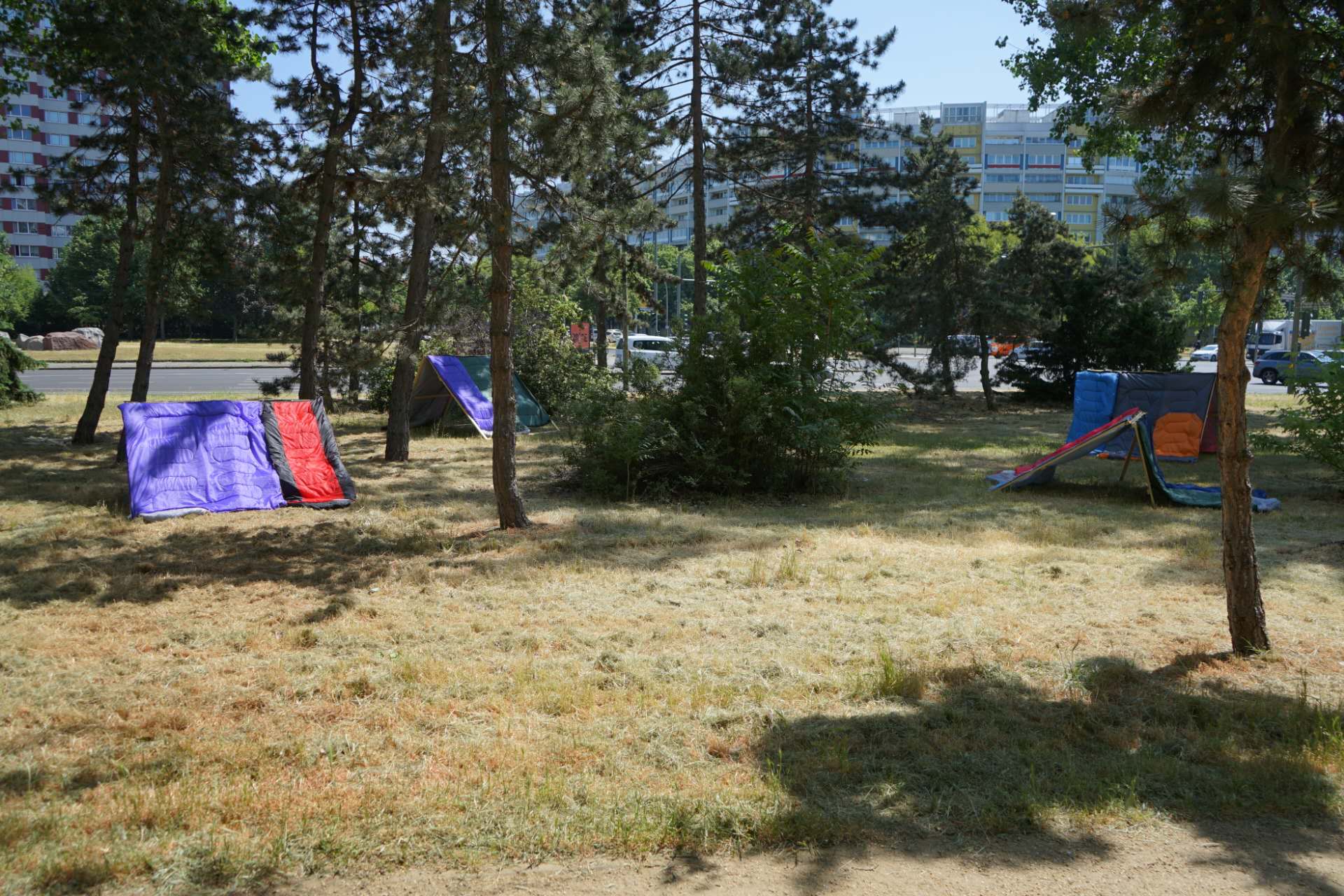
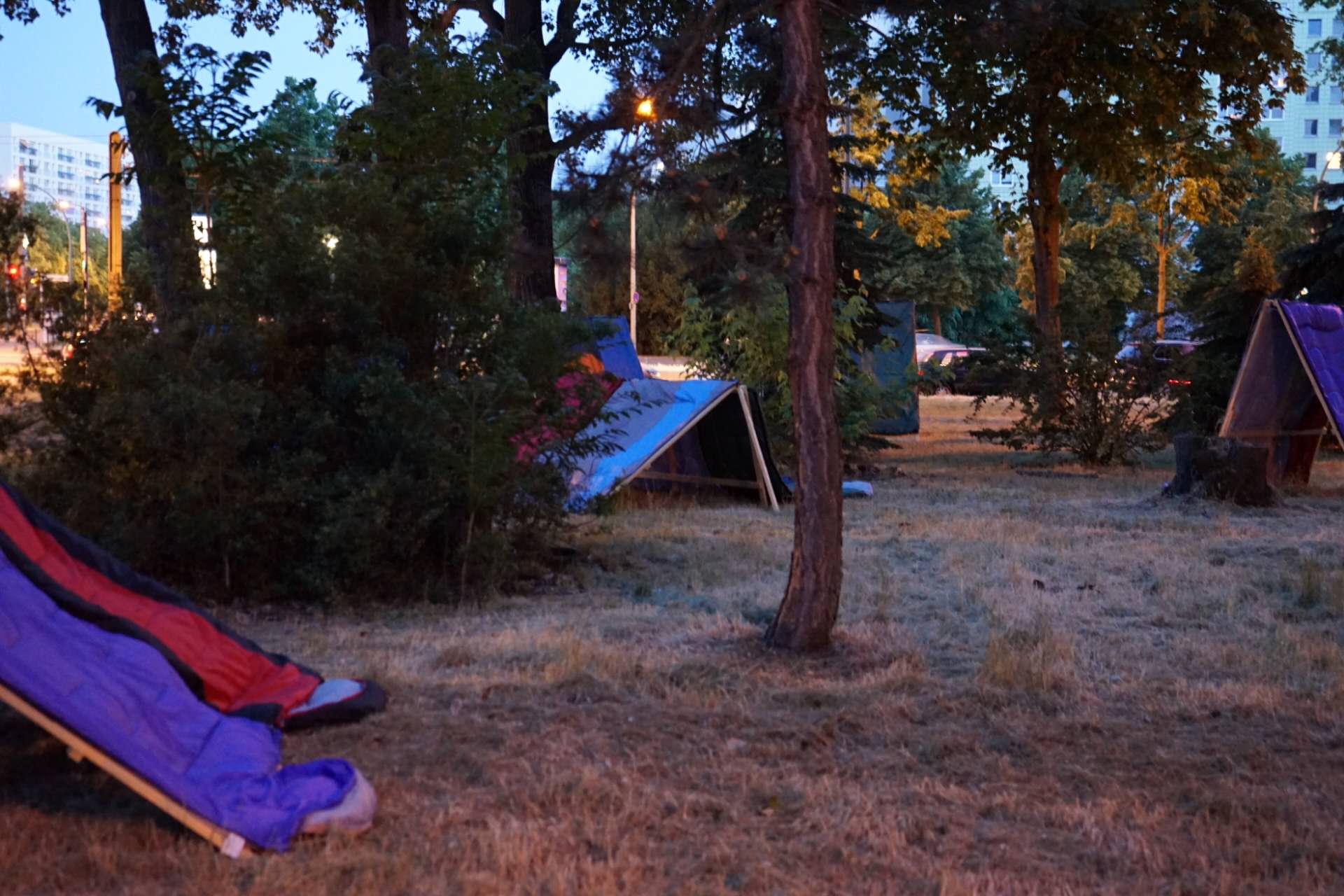
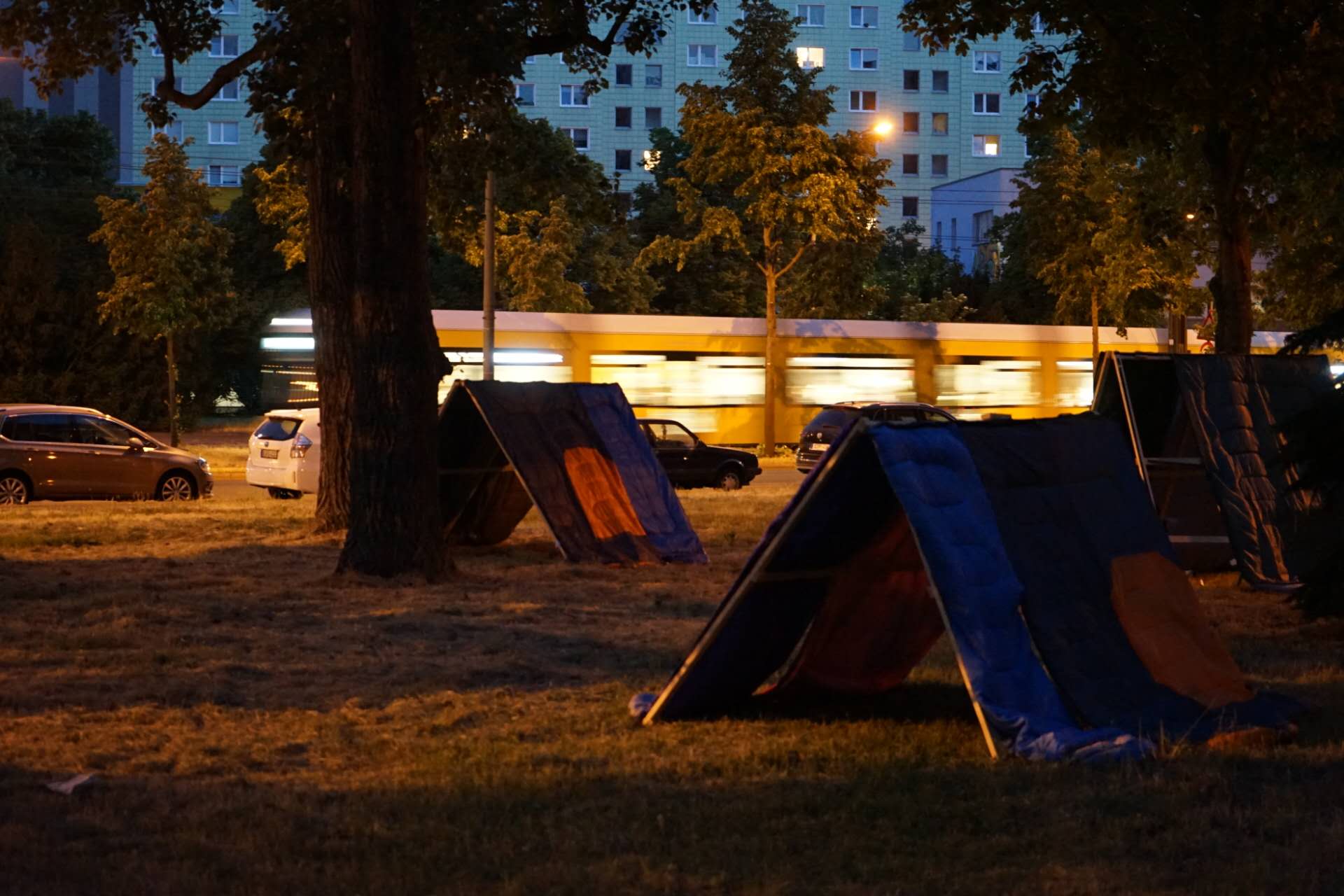
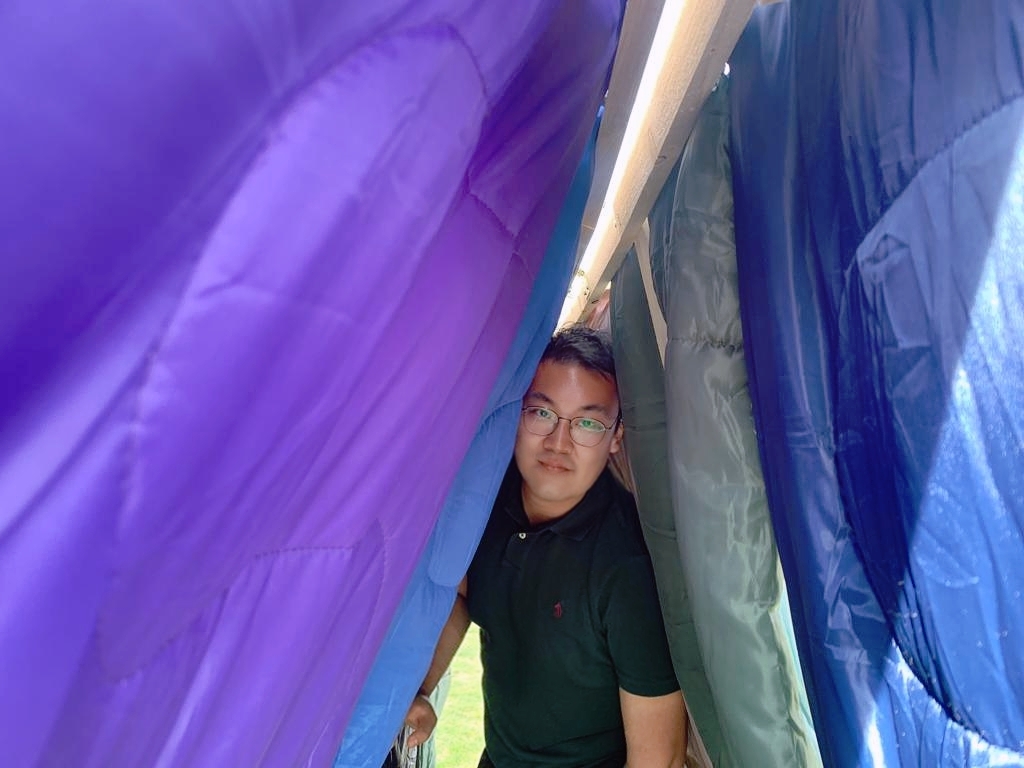
The installation comprises seven modular wooden roof structures, inspired by the "round ridge roof" of traditional Chinese architecture, historically associated with lower social classes. The deliberate choice of this modest roof form symbolizes social hierarchies and highlights the precarious existence of marginalized groups. Sleeping bags, serving as symbols of both protection and mobility, are draped over the wooden structures as "roof tiles." This symbolic use reflects the central role of sleeping bags in the lives of homeless individuals, offering protection, warmth, and a rudimentary sense of "home."
The number "7" in the title carries multiple layers of meaning. It references the creation week in Genesis, symbolizing rest, protection, and renewal in religious and cultural contexts. Simultaneously, it serves as an aesthetic and conceptual anchor that emphasizes the modular structure of the installation. The structures are designed as open frameworks without walls or doors, metaphorically visualizing the fragility and mobility associated with homelessness. This openness not only symbolizes a lack of security but also underscores the inherent ambivalence of the concept of "home."
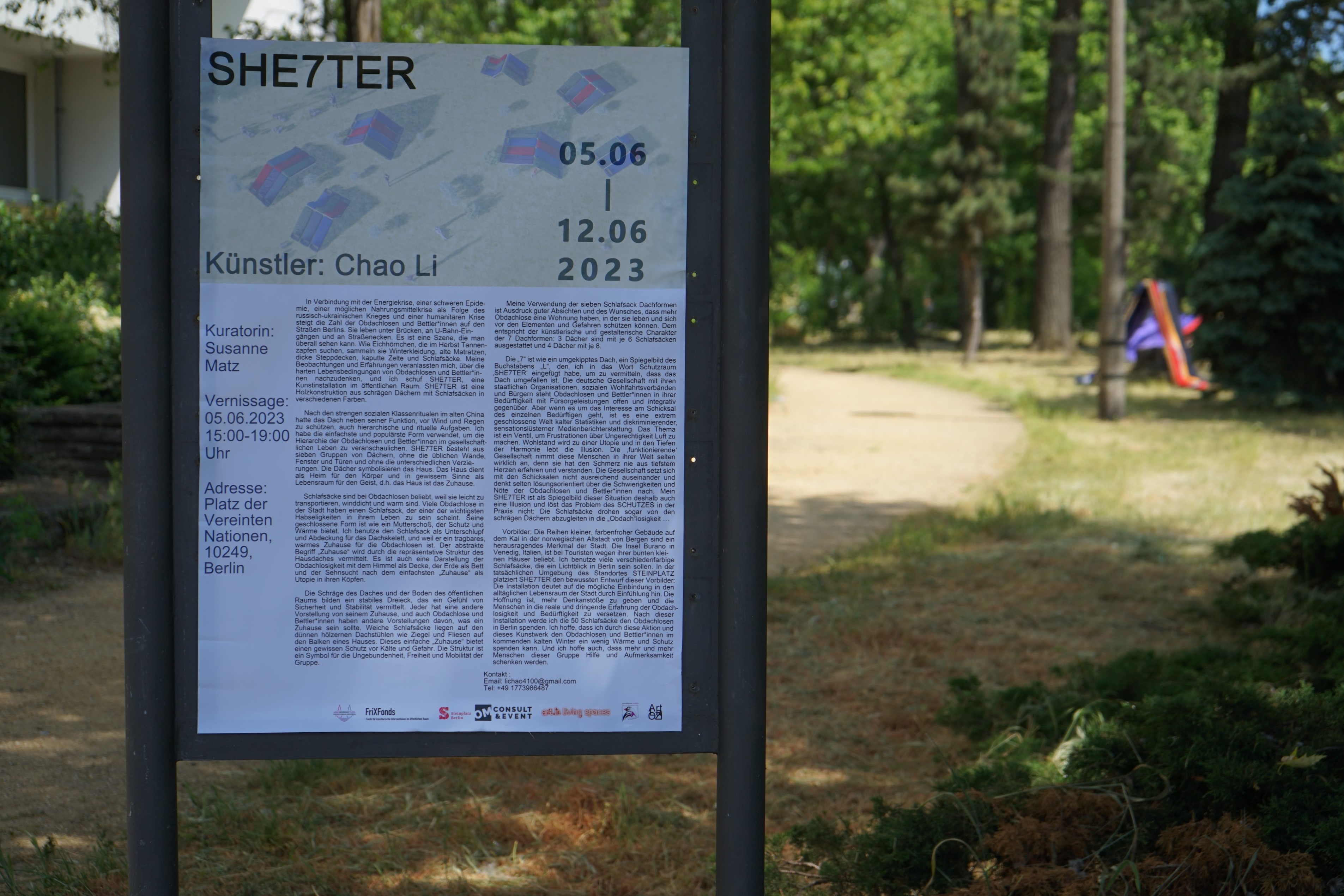
SHE7TER is strategically placed in public spaces such as Steinplatz, Platz der Vereinten Nationen, and the CCA Berlin – Center for Contemporary Arts. Its deliberate integration into the urban environment prompts reflection on the interplay between space, society, and individual marginalization. The vibrant colors of the sleeping bags create a striking visual contrast with the gray Berlin winter, oscillating between hope and isolation. The installation invites viewers to move beyond passive observation and engage empathetically with the lived realities of homelessness.
This work is intentionally conceived as a dialectical reflection on "shelter": while the physical structure offers only a symbolic form of protection, it exposes the gaps and paradoxes in societal responses to homelessness. German society often presents itself as open and inclusive, yet its treatment of homeless individuals frequently reveals a cold bureaucratic approach and fragmented support systems.
Following the exhibition, the 50 sleeping bags used in the installation will be donated to homeless individuals in Berlin. This act, both symbolic and practical, emphasizes the connection between art and social action. The project aims to raise awareness, foster empathy, and encourage deeper engagement with the urgent and complex issue of homelessness.