In contemporary information society, the rise of new media technologies has accelerated the dynamic cycle of information production and dissemination, submerging us in an incessant torrent of information. This phenomenon of “information explosion” has not only transformed how humans acquire and process information but also reconfigured the complex relationships between knowledge, power, and ideology. Against this backdrop, newspapers, as a historically linear and enduring medium, exhibit a paradoxical complexity. On the one hand, newspapers, as a medium combining text and images, carry the function of recording specific historical stages, embodying a continuity along the axis of time. On the other hand, their immediacy and narrative features are increasingly displaced by the efficiency and fragmentation of new media. However, it is precisely this seemingly “obsolete” physical medium that reveals its undeniable power and tension within the construction of ideology. Newspapers are not merely tools for documenting social events but also materialized manifestations of ideological narratives and historical construction, simultaneously displaying the operation of power while concealing mechanisms of information control and selection.
Based on this understanding, I selected important official Chinese newspapers from different historical periods as materials for my work, including People’s Daily, Legal Daily, Guangming Daily, and others. These newspapers not only record pivotal moments of social transformation but also serve as central carriers of ideological dissemination through highly editorialized news narratives. These media texts are both products of political information and instruments of information concealment—positioned between the display and suppression of information, they act as “ideological filters” that obscure their internal value judgments and power logic under the guise of objective news reporting. Therefore, this work is not merely a rediscovery of the materiality of newspapers but also a metaphorical critique of the power structures underlying information dissemination.
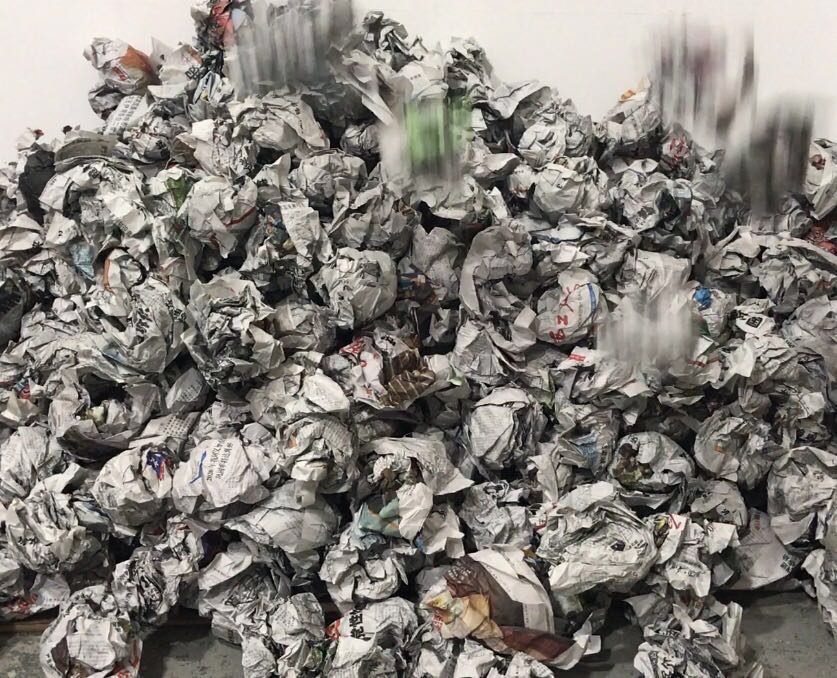
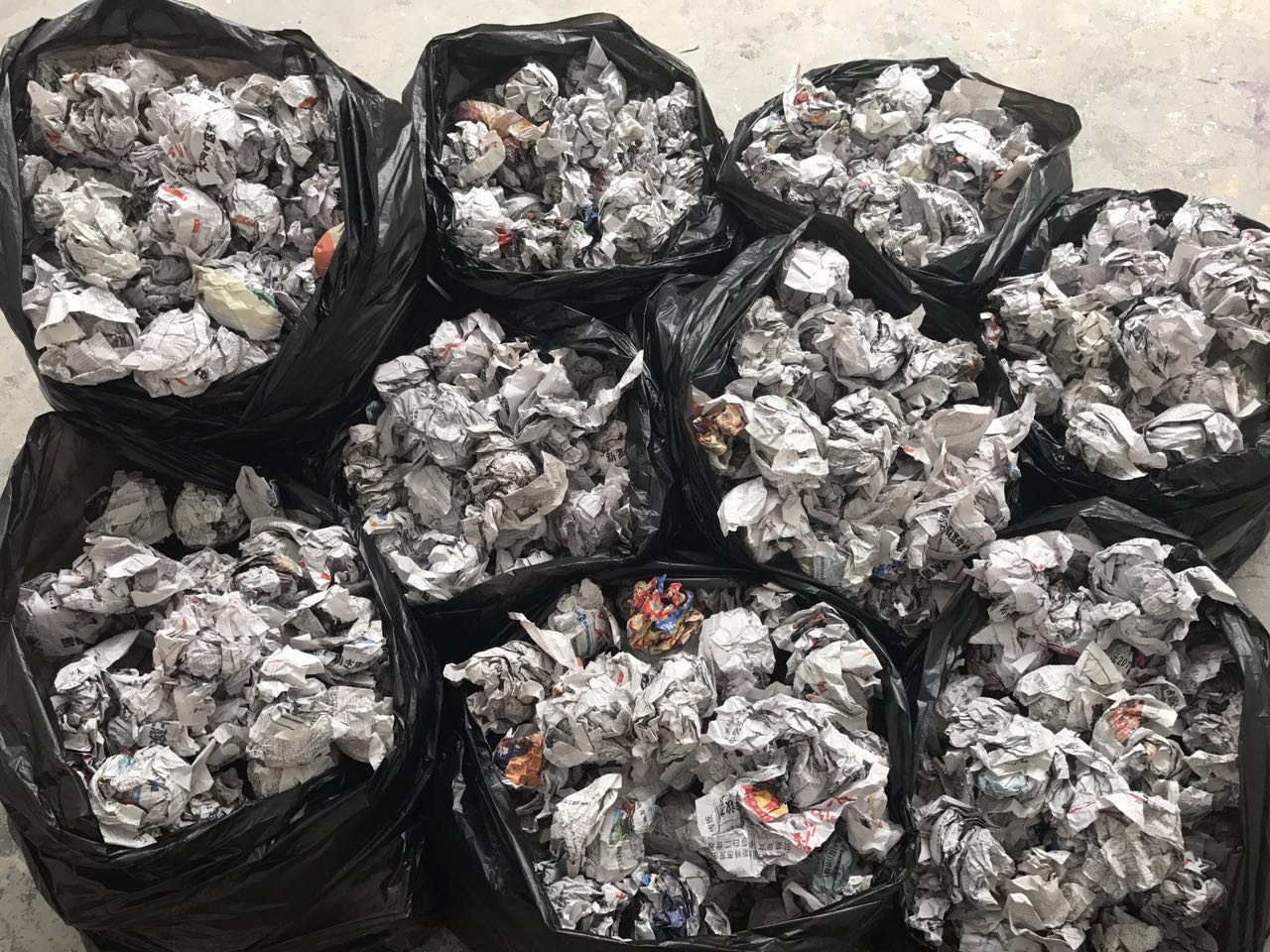
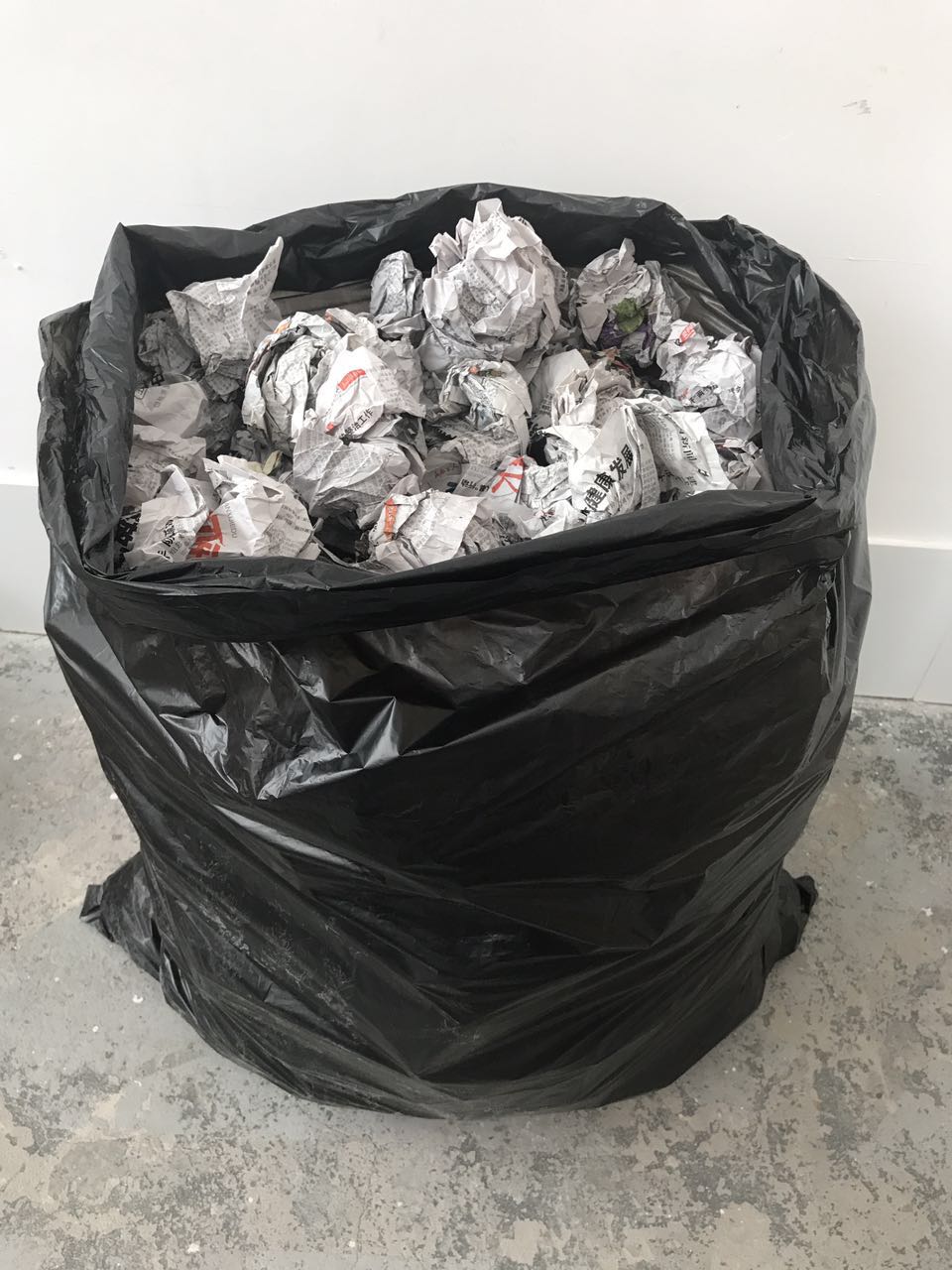
In this performance art practice, I covered my head entirely with newspapers—a gesture imbued with strong symbolism. Newspapers, as tools of information transmission, simultaneously become barriers to individual perception, compressing the space for vision, cognition, and emotion. Within this constrained perspective, I attempted to decipher the information under dim light. However, the density of information, the emptiness of the narratives, and the tactile experience of the newspaper’s materiality increasingly intensified my sense of frustration. One by one, I crumpled the newspapers on my head and discarded them to the ground, mimicking the action of apples falling from a tree. This process was not only a deconstruction of the materiality of newspapers but also a metaphor for the transformation of information from authoritative symbols into discarded waste. The crumpled paper fell to the ground briefly, forming a new visual language in stark contrast to the “impoverishment” of the content I was attempting to process. This act revealed the powerlessness of individuals when faced with the overwhelming flood of information in contemporary society. At the same time, it reflected on how information loses its significance through media manipulation, ultimately reduced to silent remnants.
The core significance of this work lies in its dual exploration of performative action and materiality, reactivating the intricate relationship between information dissemination and ideology. True information is not simply stored within media texts but resides in the sense of distance between the individual, the information, the medium, and reality. This distance becomes an opportunity for individuals to reexamine the structures of information, the narratives of ideology, and their self-awareness. Throughout this process, the performance provides both the audience and the creator with a decontextualized space where the materiality, symbolism, and ideological nature of information are presented in a novel way. By exploring the interplay between concealment and revelation, touch and perception, the work examines the “flow” and “accumulation” of information, striving to create a reflective space in the age of information overload, where individuals can reclaim their perceptual agency within the flood of media.
From a theoretical perspective, this work can be interpreted as a critical response to Deleuze’s concept of “capitalist flows” or as an artistic manifestation of Foucault’s framework of “knowledge and power” in information governance. The materiality of newspapers is reactivated in the context of performance art, becoming a symbolic carrier of ideological systems. Through tactile and visual interactions, the work expands the boundaries of perception. The moment when the paper falls to the ground not only signifies the deconstruction of power narratives but also symbolizes the possibility for individuals to reclaim their subjectivity within modern information society. This artistic practice deeply probes the relationships between media and power, the individual and society, constructing a multidimensional reflection that transcends text and material, symbol and reality, offering new theoretical and practical perspectives on the conditions of individuals in contemporary information culture.