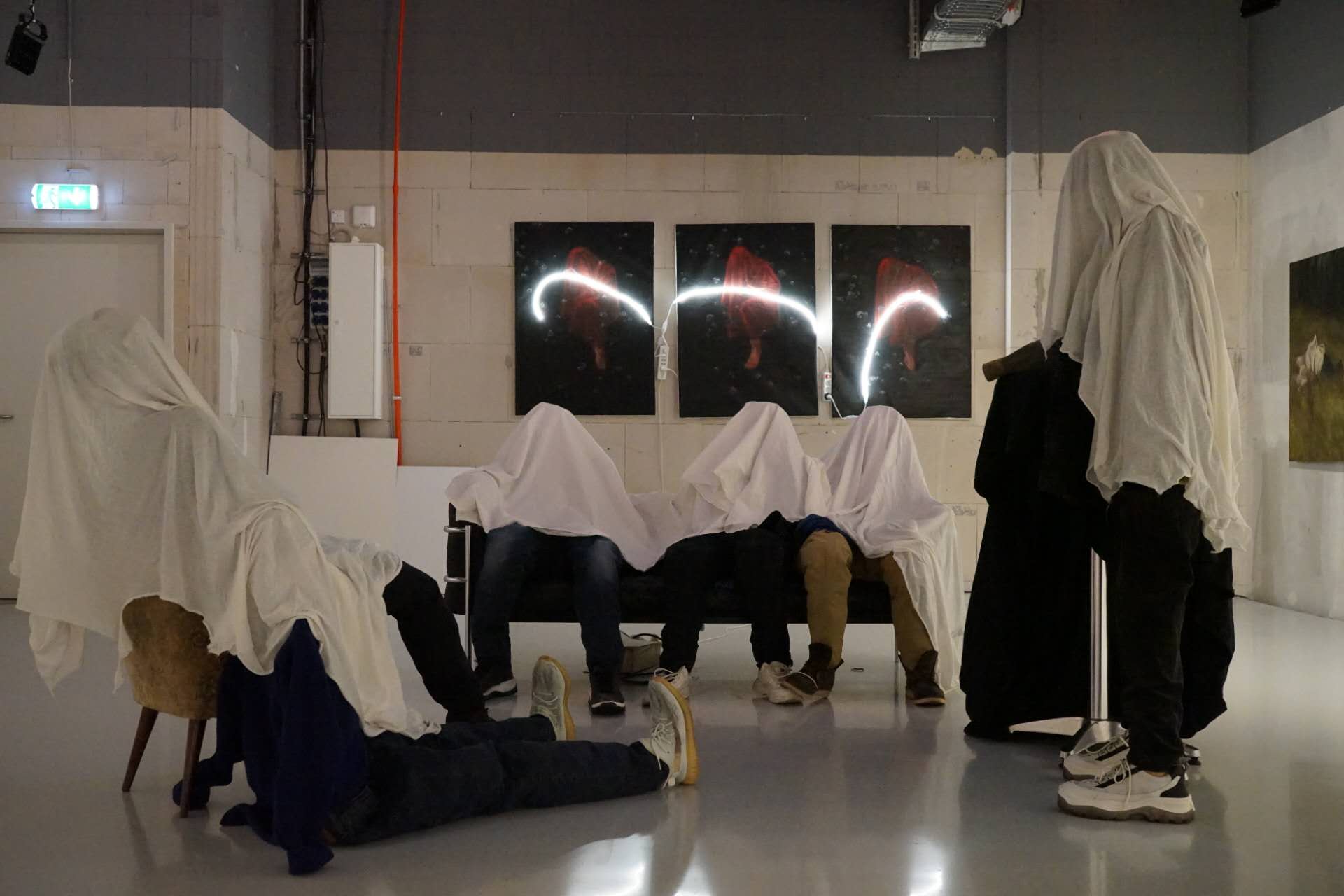
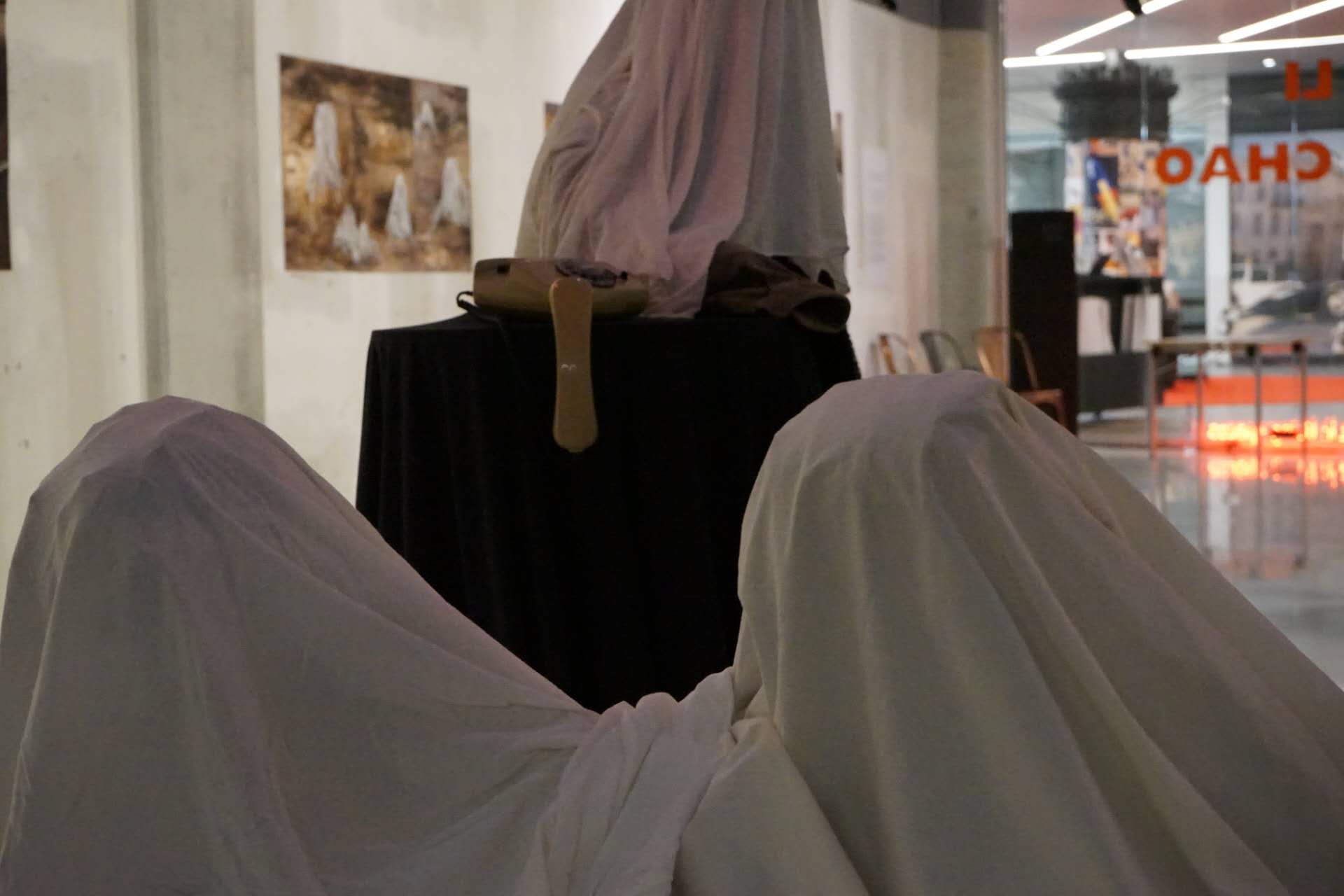
The Closest Stranger is an installation art piece exploring the erosion of “boundary awareness” in interpersonal and social relationships. Through symbolic spatial arrangements and behavioral metaphors, the work delves into the complexities of boundary dissolution in contemporary society, examining its profound impact on personal freedom, social order, and human relationships. The title itself embodies a paradox: those closest to us can often feel like strangers, as the lack of boundaries transforms intimacy into oppression.
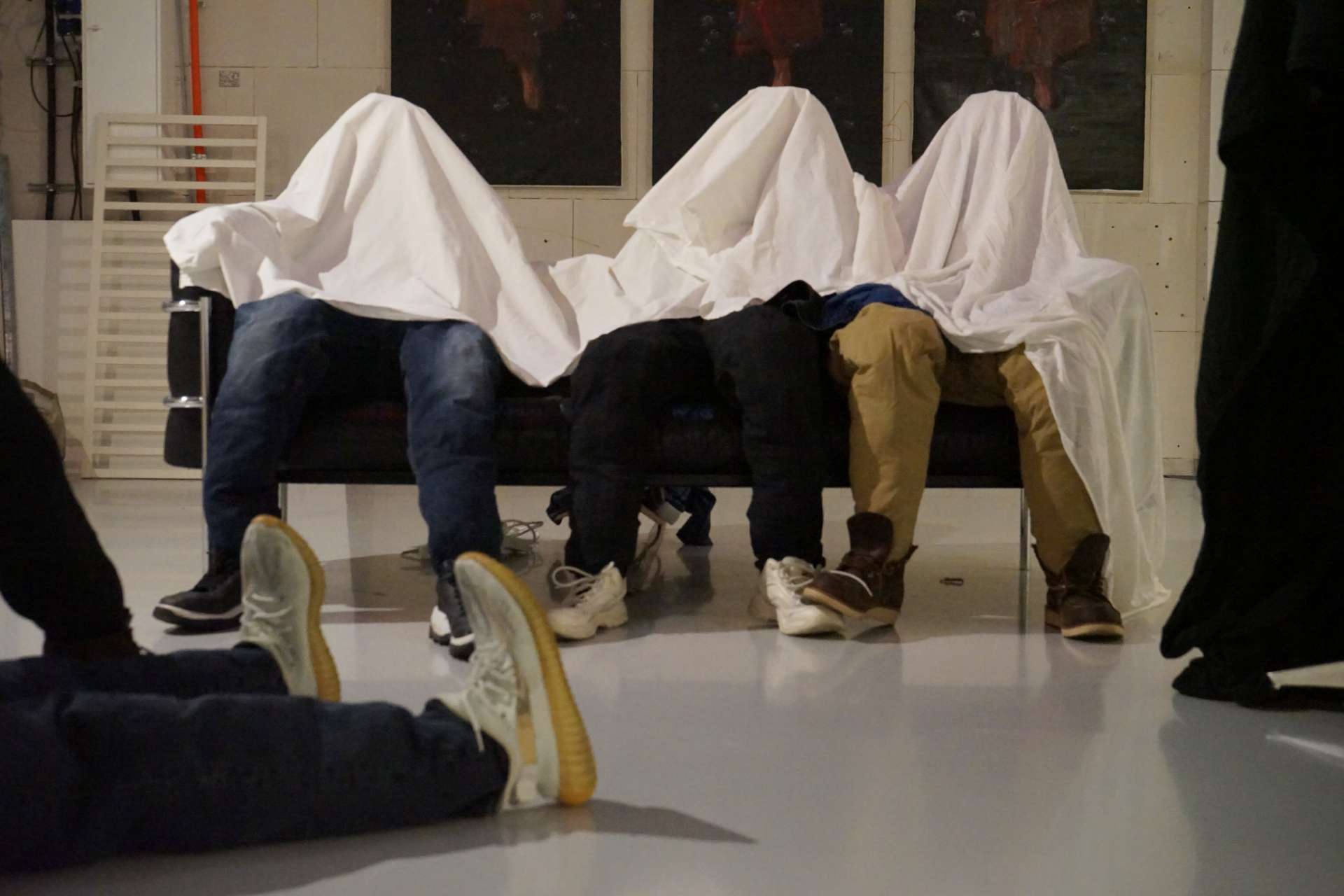
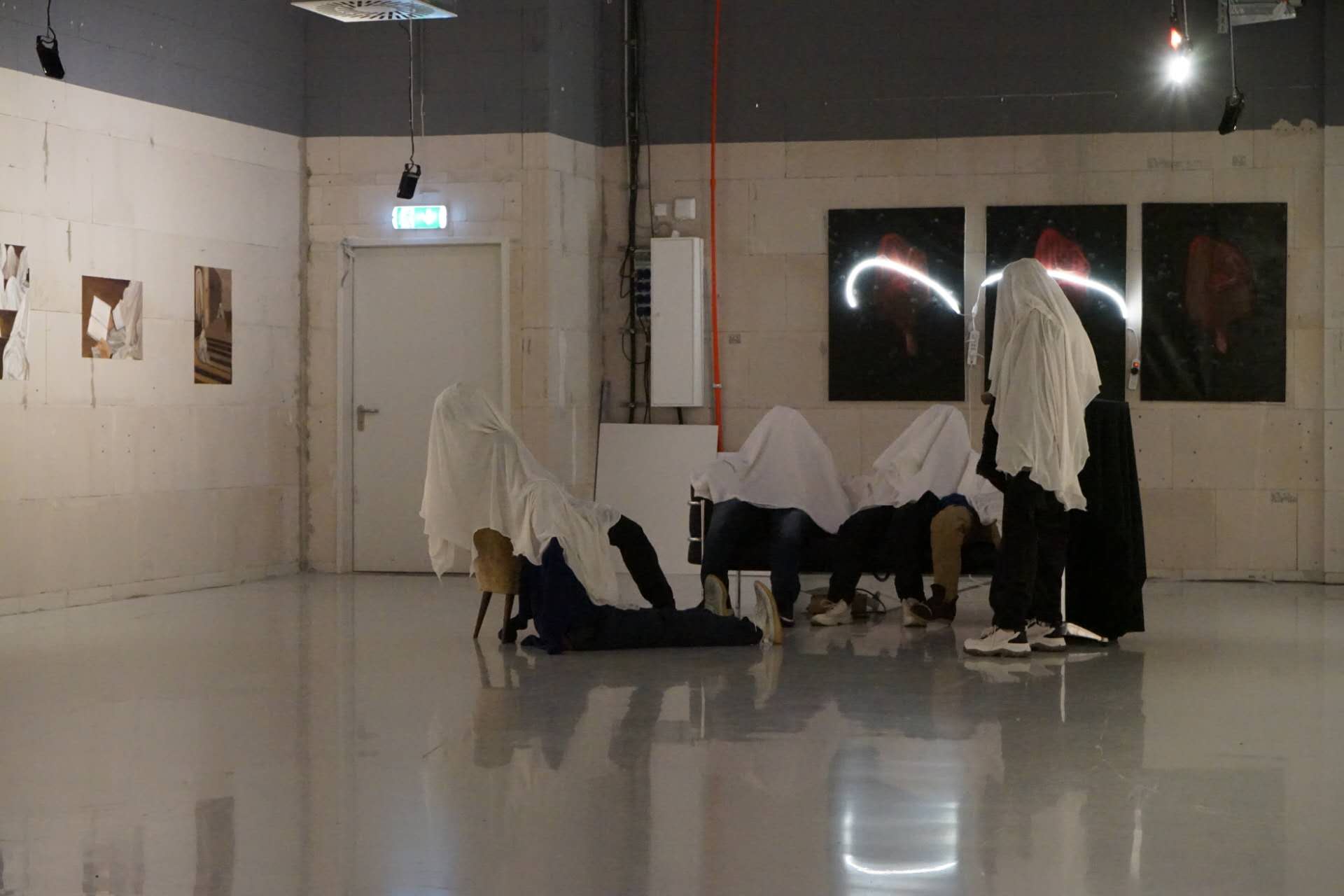
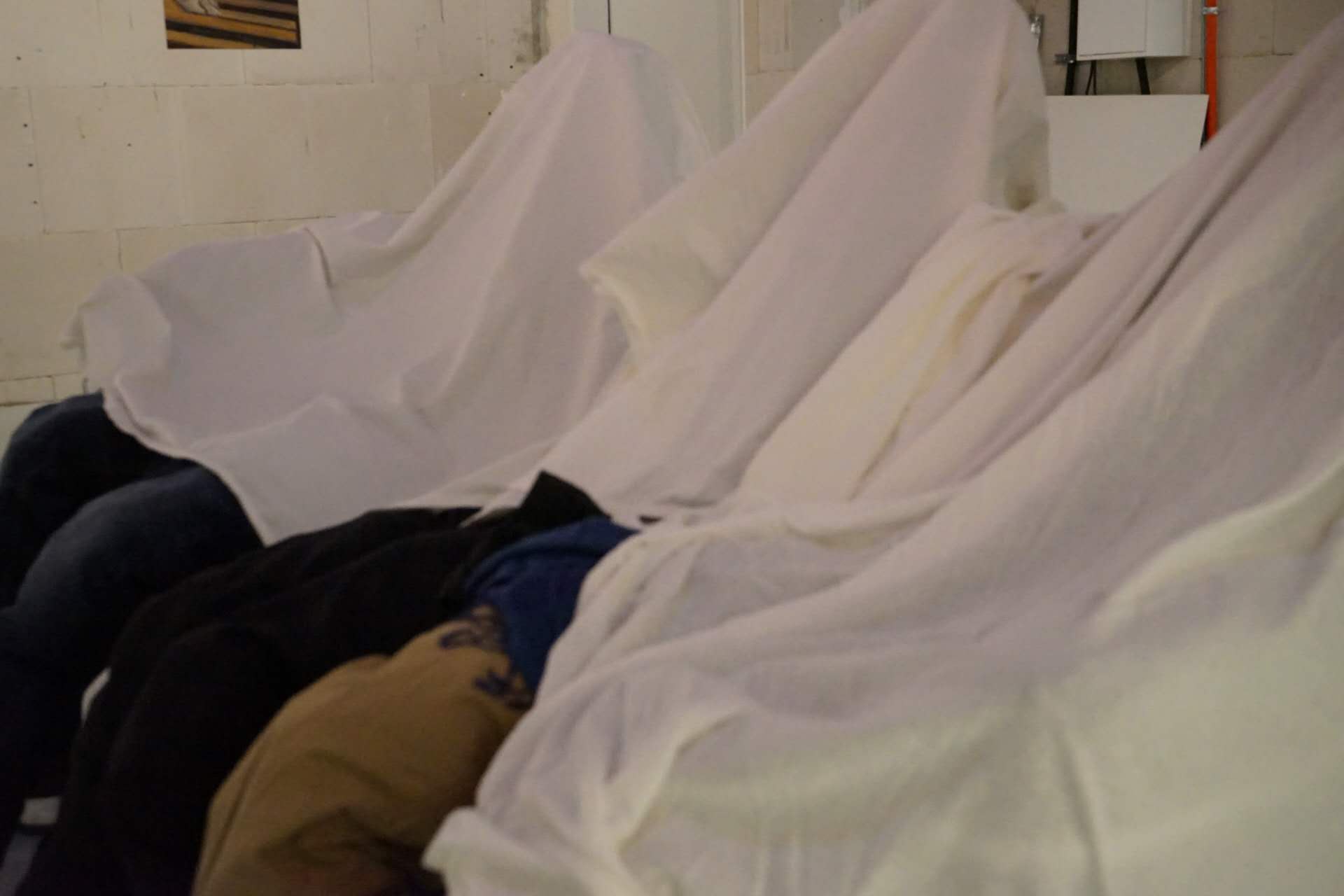
In this installation, six figures are seated around a sofa, seemingly engaged in a conversation. However, their upper bodies and heads are entirely covered with white cloth, concealing their faces and expressions. This concealment symbolizes the disappearance of authentic selfhood in interactions where boundaries are disregarded. Unable to discern their emotions, the viewer is left with only fragmented clues, reflecting the blurred line between sincerity and pretense in interpersonal relationships.
The characters' identities and statuses are subtly implied through their pants and shoes, while their postures and interactions reveal the tension and imbalance that arise when boundaries are crossed:
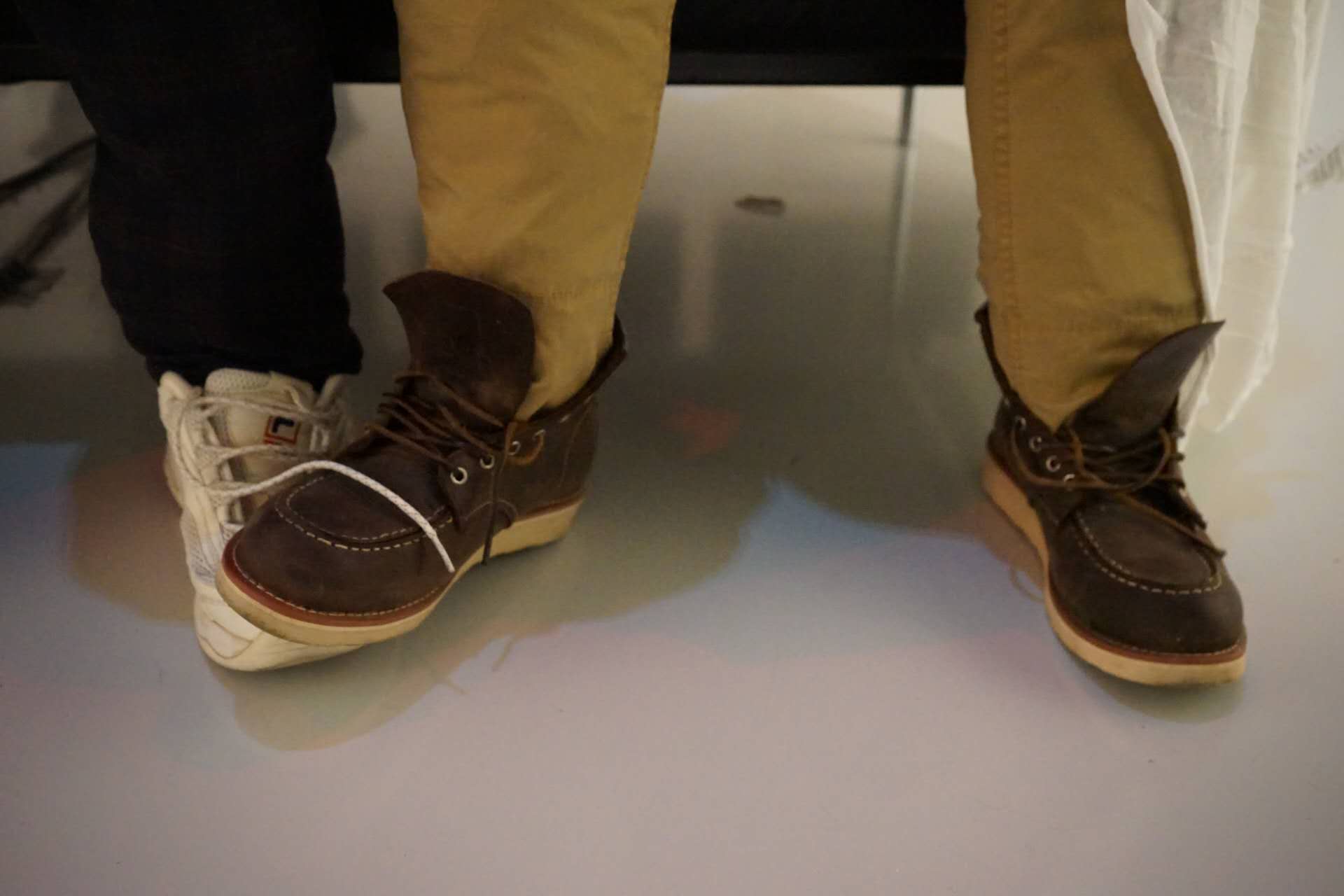
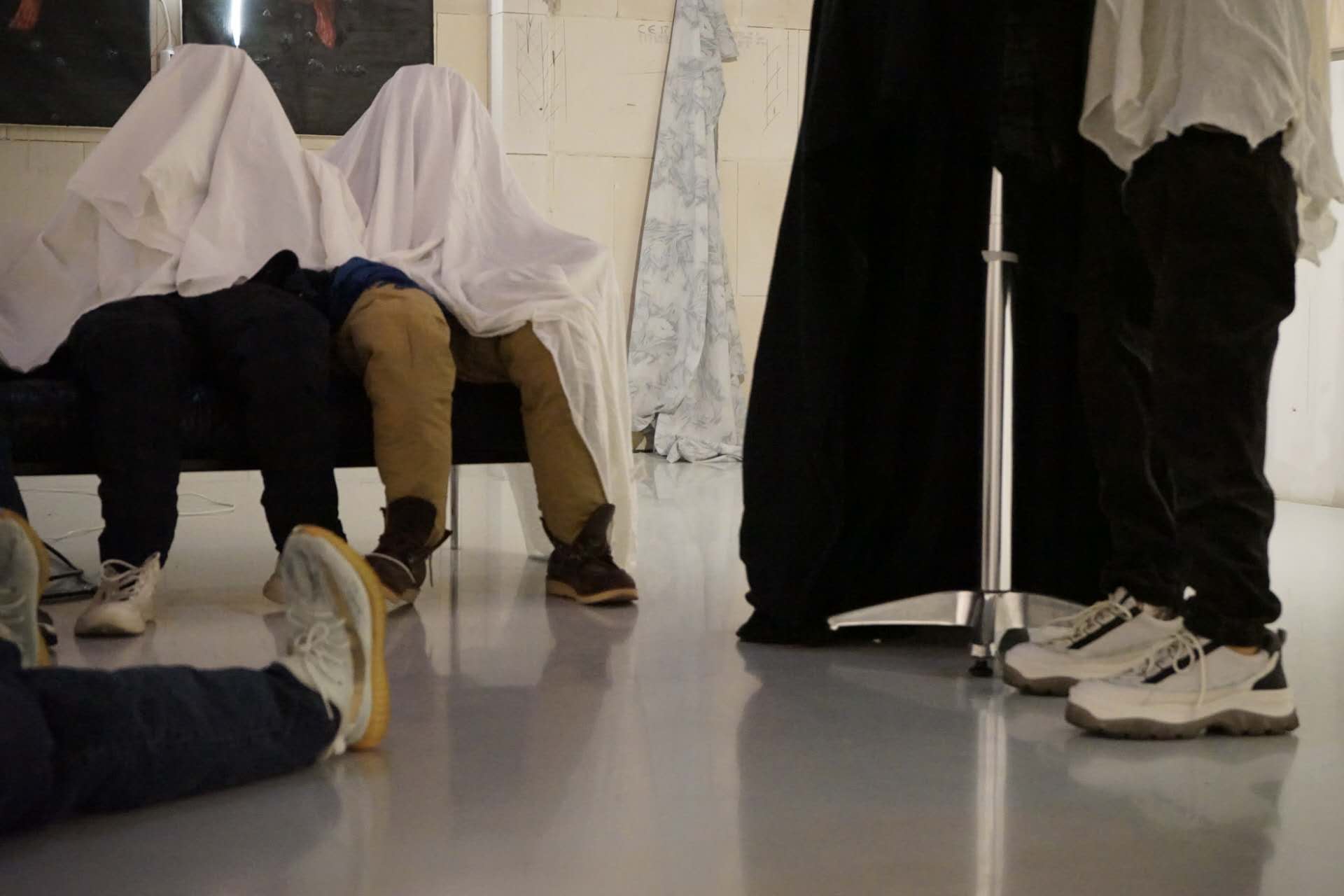
On the right side of the sofa, two figures sit closely together, their bodies pressed against each other. However, one figure’s shoe is stepping on the other’s foot. This juxtaposition illustrates the hidden power struggles and suppression of individuality within intimate relationships. Physical proximity belies an underlying erasure of both personal and psychological boundaries, revealing a facade of harmony that masks inner conflict.
On the left side of the sofa, two other figures maintain physical distance, but one directs an invasive gaze toward the other. This "gaze of violence" penetrates the psychological boundary of the observed figure, symbolizing how judgment, scrutiny, and disdain in social relationships silently undermine personal autonomy and emotional security.
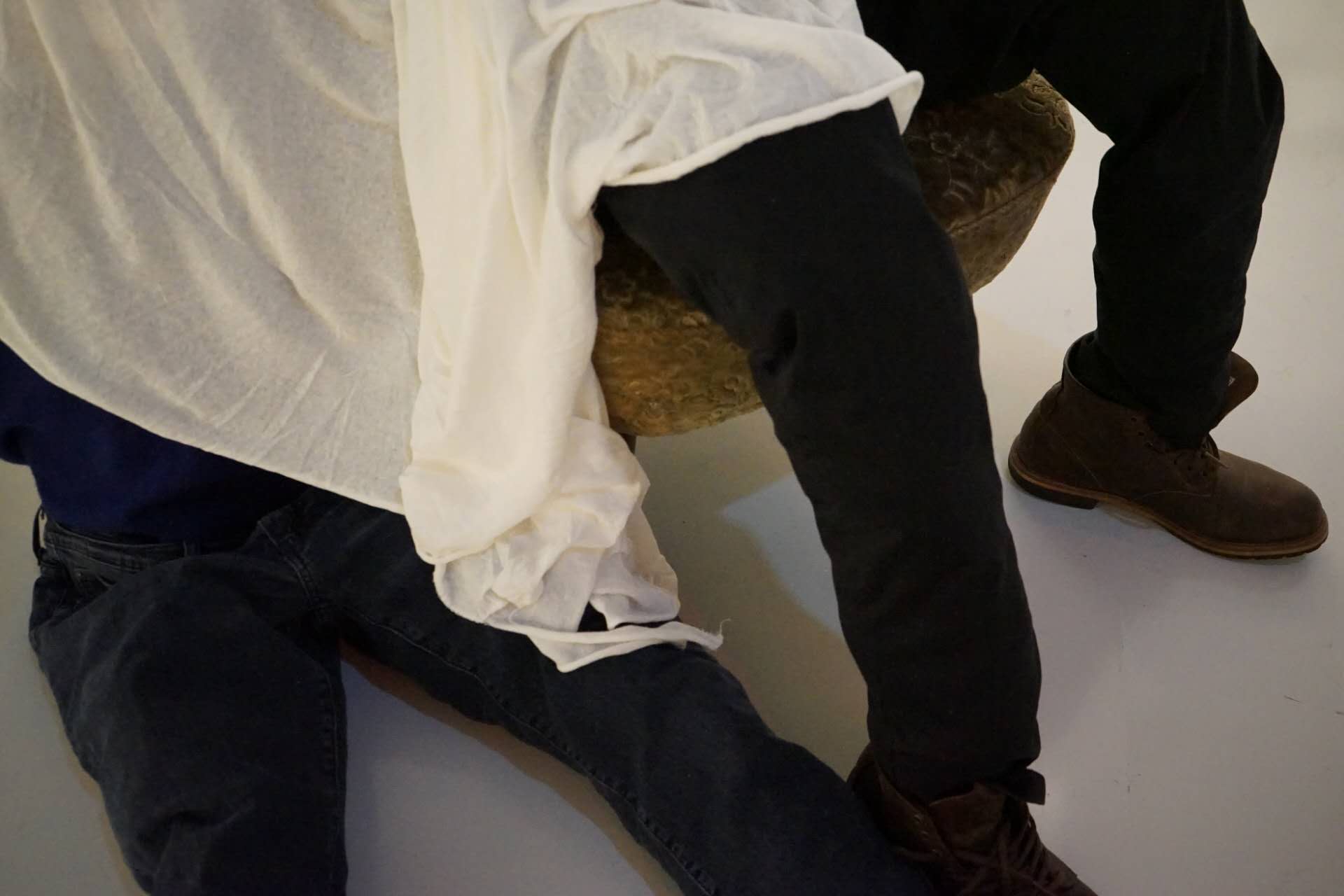
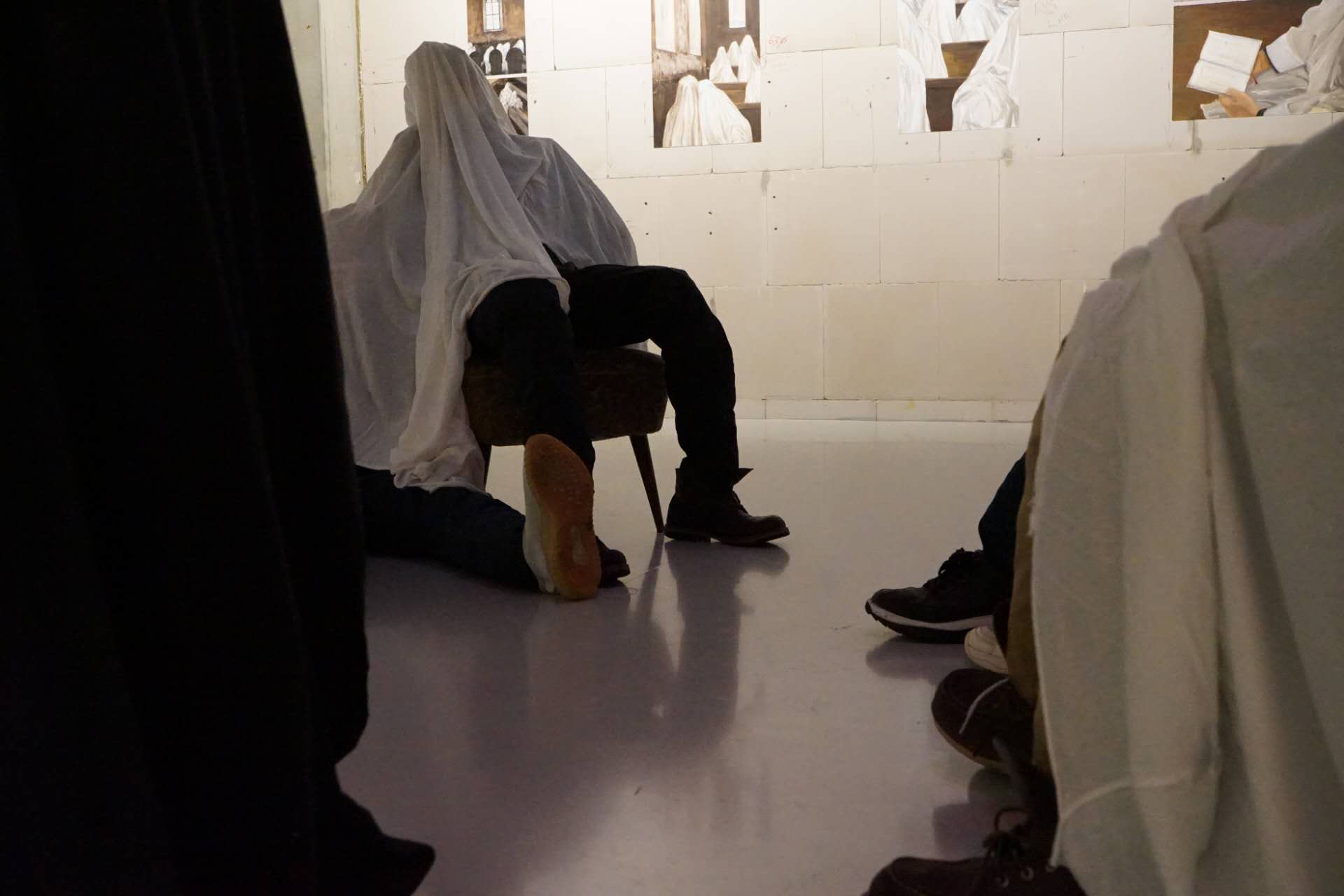
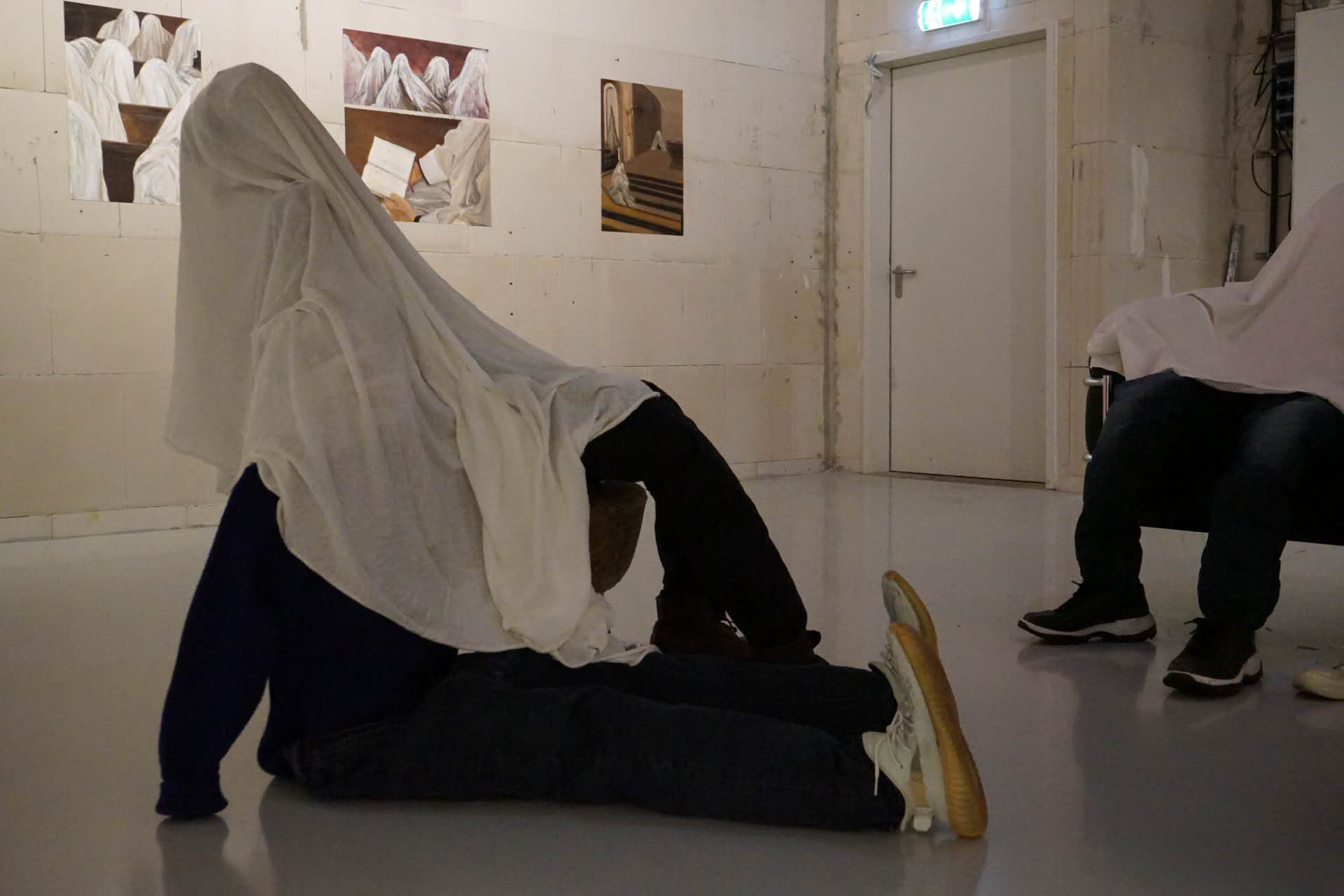
In front of the sofa, one figure sits on a chair while another sits on the floor, establishing a visual metaphor for hierarchy and inequality. From the front, they appear mutually reliant, but a side perspective reveals that the person on the floor is bearing the weight of both figures with their arm braced against the ground. Should this support be withdrawn, both figures would collapse. This dynamic critiques the invisible exploitation inherent in seemingly cooperative or supportive relationships, where the stability of those in higher positions is sustained at the expense of those below.
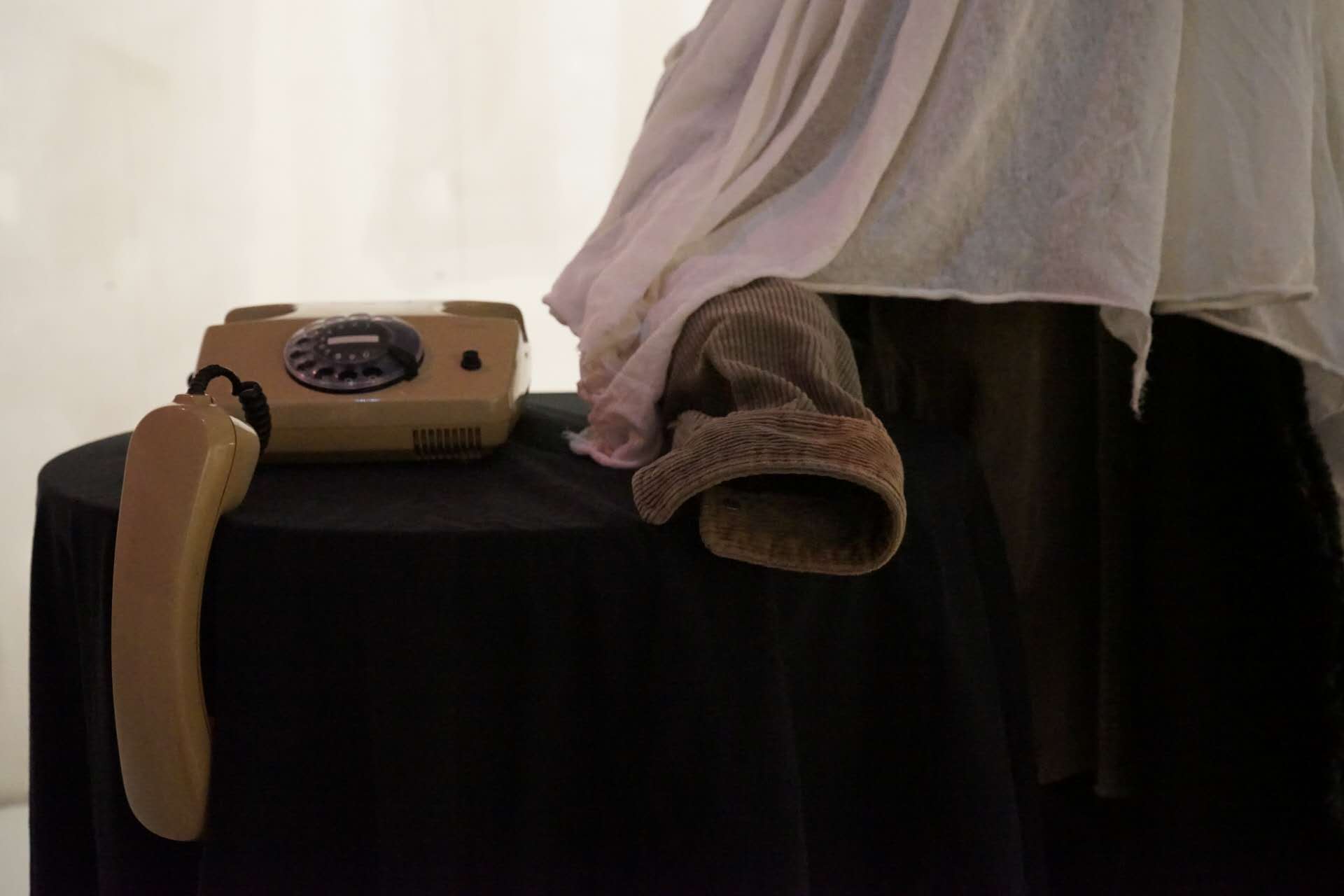
To the right of the sofa, a standing figure interacts with a telephone. The handset is lifted, suggesting an act of eavesdropping. This element reflects the modern erosion of privacy through technological advances. The telephone becomes a metaphor for the pervasive surveillance, monitoring, and invasion of personal boundaries facilitated by contemporary technologies. Often justified under the banners of "for your own good" or "in the public interest," such intrusions expose the tension between technological development, legal frameworks, and ethical boundaries.
Philosophically, boundaries are foundational to distinguishing the self from the other, forming the bedrock of individual autonomy and relational ethics. When boundaries blur, the self is dissolved, subsumed into a relentless cycle of interference and control by others. Simultaneously, individuals become objects of intrusion and domination. As philosopher Emmanuel Levinas argues, ethical relationships begin with respect for the other, which demands the recognition of their boundaries rather than subsuming them into one’s own logic of control. The Closest Stranger critiques this ethical failure, challenging viewers to question the legitimacy of power dynamics within modern relationships.
The work also reflects the unique challenges of boundary awareness within Chinese cultural and social contexts. In familial relationships, intimacy often serves as a pretext for boundary violations. Parents, under the guise of “doing it for your own good,” frequently interfere in their children’s choices, including friendships, marriages, and even sexual orientation. Conversely, children often intrude upon their parents' remarriage, personal freedom, and life decisions, creating a cycle of mutual infringement. Such reciprocal violations disrupt the independence of individuals, generating conflicts and imbalance within the family structure.
In the broader social sphere, moral coercion is a common manifestation of boundary erosion. Young people who fail to offer their seats to the elderly are often physically assaulted; elders assert dominance at family dinners by dispensing unsolicited life advice; strangers criticize others’ clothing and behavior in public with condescending authority. These behaviors, while cloaked in the rhetoric of “public morality,” often mask a desire for power and control, reflecting a collective indifference to personal boundaries. In this context, the closest relationships frequently become the most oppressive.
The Closest Stranger constructs a microcosm of these pervasive cultural phenomena through visual metaphors and spatial tensions. It calls for a reexamination of the concept of boundaries, emphasizing their significance as safeguards of individual freedom and dignity, as well as the ethical foundation of social order. By exposing the consequences of boundary violations, the work invites viewers to reflect on the possibility of reconstructing boundaries—not only between people but also between technology and humanity, efficiency and privacy, power and ethics.