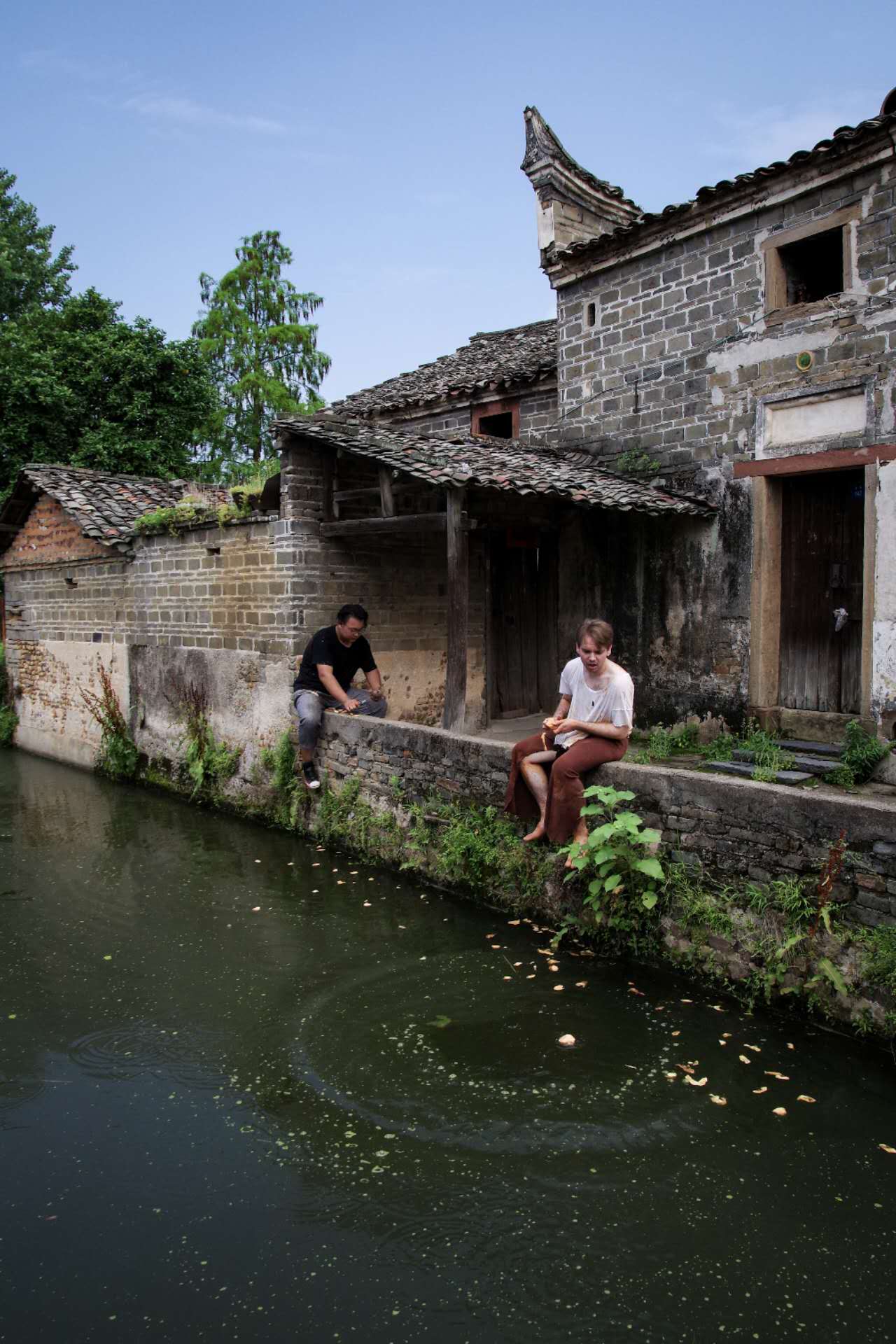
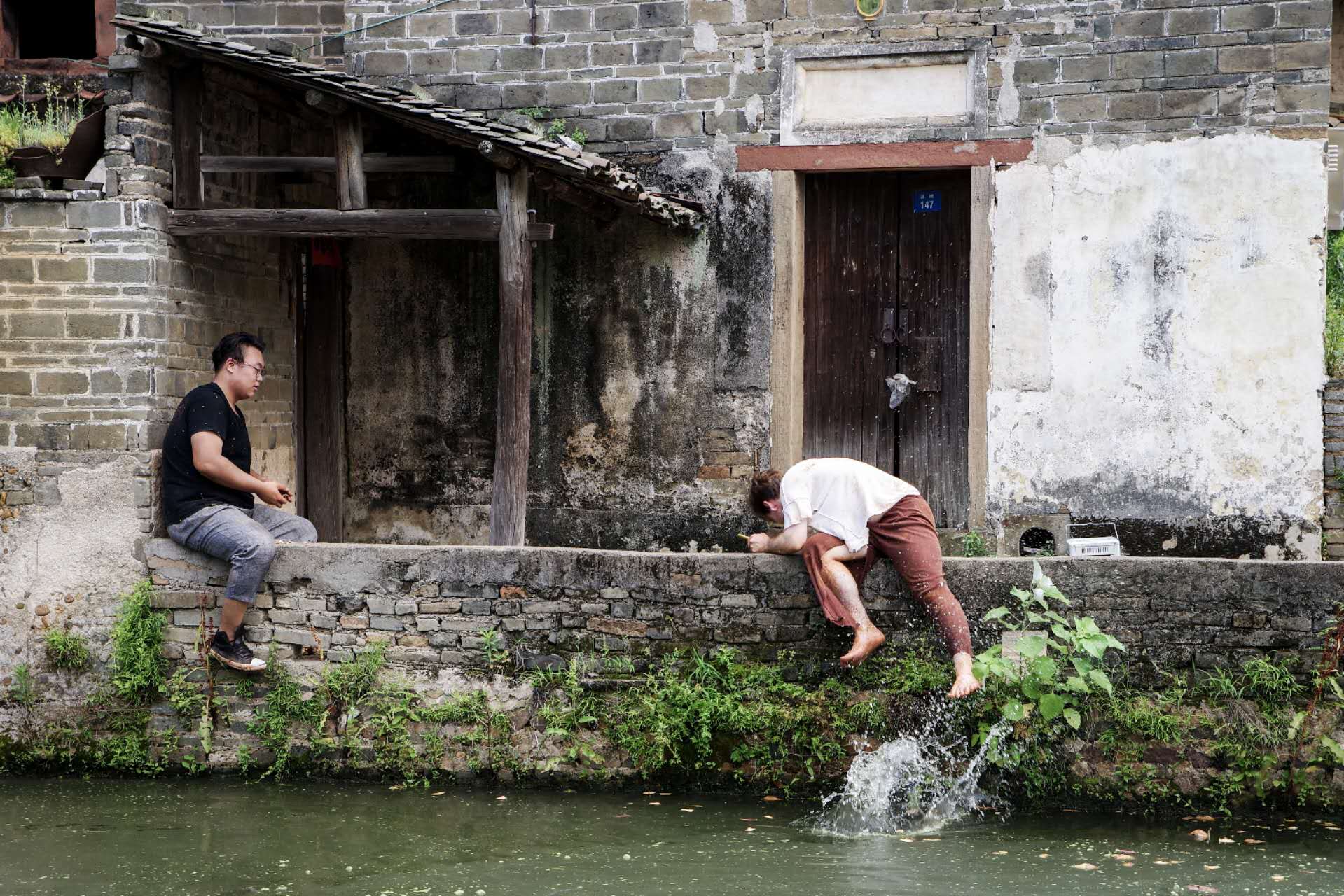
Sweet Earth is one of the performances I created in collaboration with the German artist Raimund Rosarius during the Gan&Gan International Performance Art Festival in 2018, held in Jiangxi Province, southern China. Our performance took place in Meibei, an ancient village first documented over 800 years ago. The village retains many buildings in feudal architectural styles, yet it is also deeply marked by the history of the Chinese Communist Party. In the 1920s and 1930s, under Communist leadership, land ownership underwent radical changes in Jiangxi Province. Land was redistributed as if drawn on a blueprint, while landlords faced expropriation, public humiliation, and violent expulsion. Near Meibei, the infamous Futian Incident, also referred to as the “Red Terror,” saw Mao Zedong brutally eliminate his intra-party rivals. According to local elders, the event left bodies scattered across the area, with rivers turning crimson from the bloodshed. Today, the current authorities treat this site as a “cultural vacuum,” ensuring that its dark history remains unknown to most. Jiangxi’s red soil, nutrient-poor and heavy, symbolizes both the physical and historical burdens of the region. Decades of neglect for rural areas in Chinese policy, combined with the village’s geographical isolation, have perpetuated an entrenched poverty—a condition that conveniently helps bury the village’s historical scars.
The harsh realities of life in Meibei and the critical engagement with its erased history formed the thematic foundation of our work. The symbolic convergence of the “Red Terror,” the blood-red river, and the red earth visually and metaphorically defined the essence of the site. We chose to explore these connections through a series of performances centered on the theme of “Earth,” with Sweet Earth serving as a primary example.
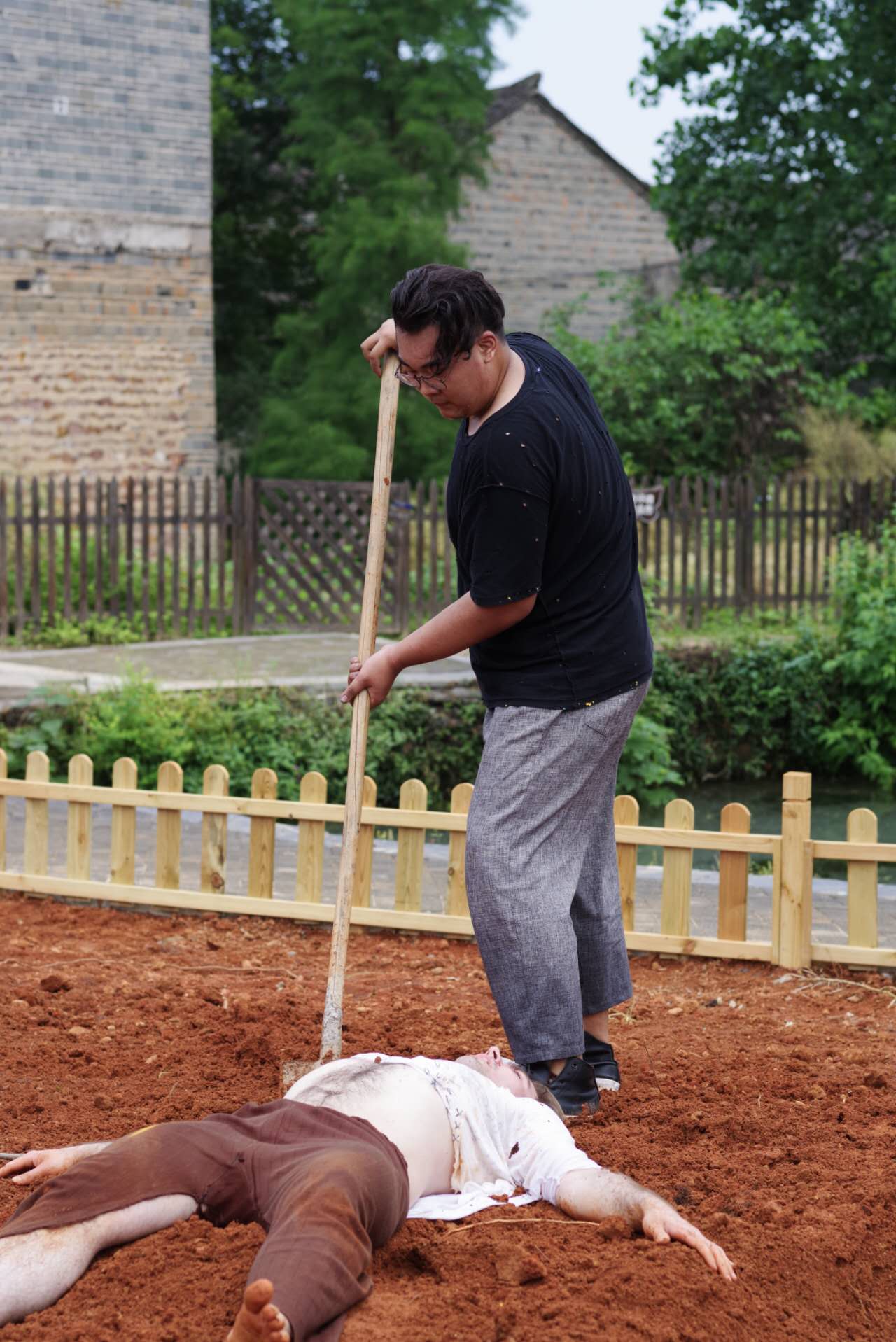
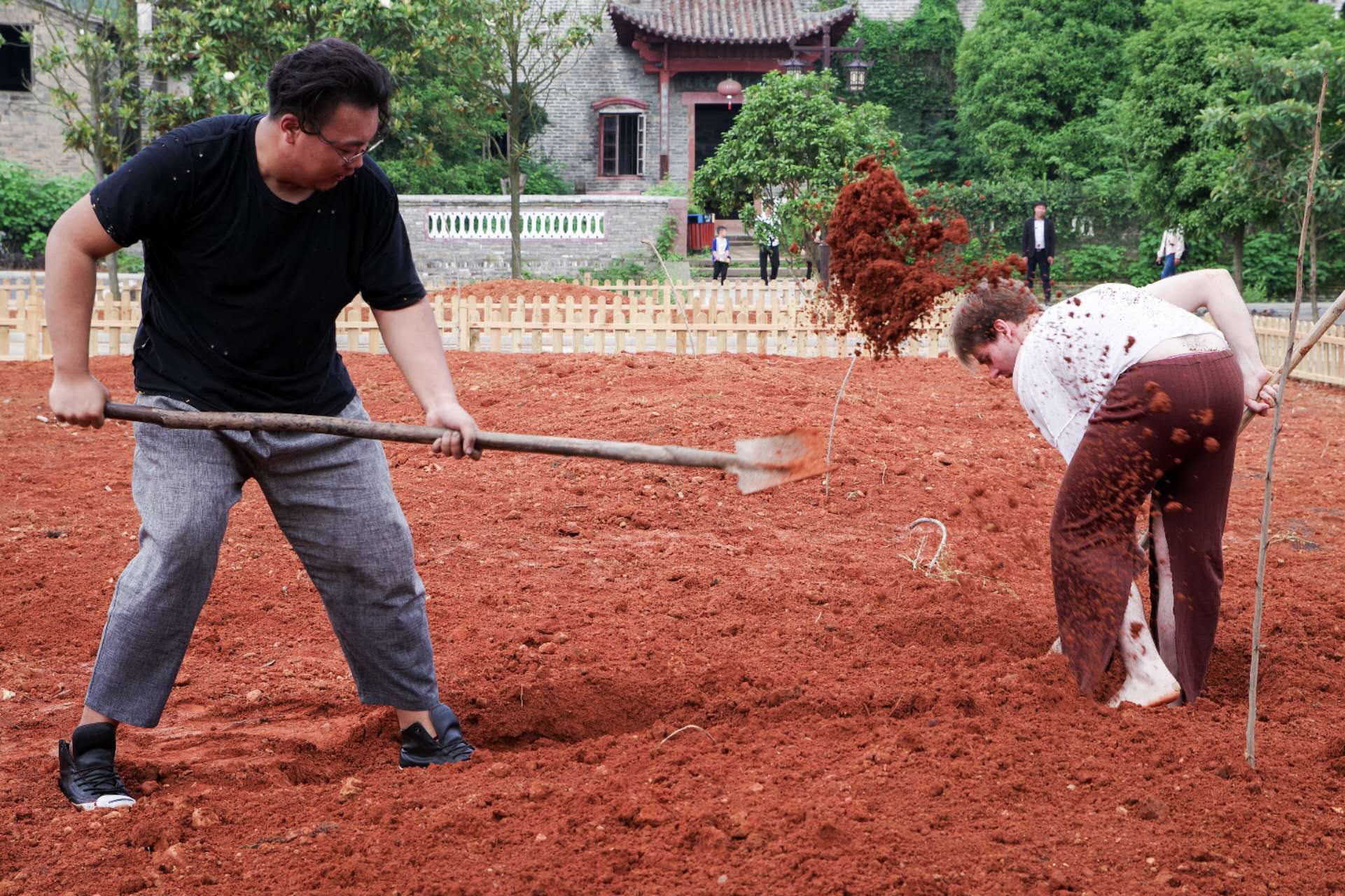
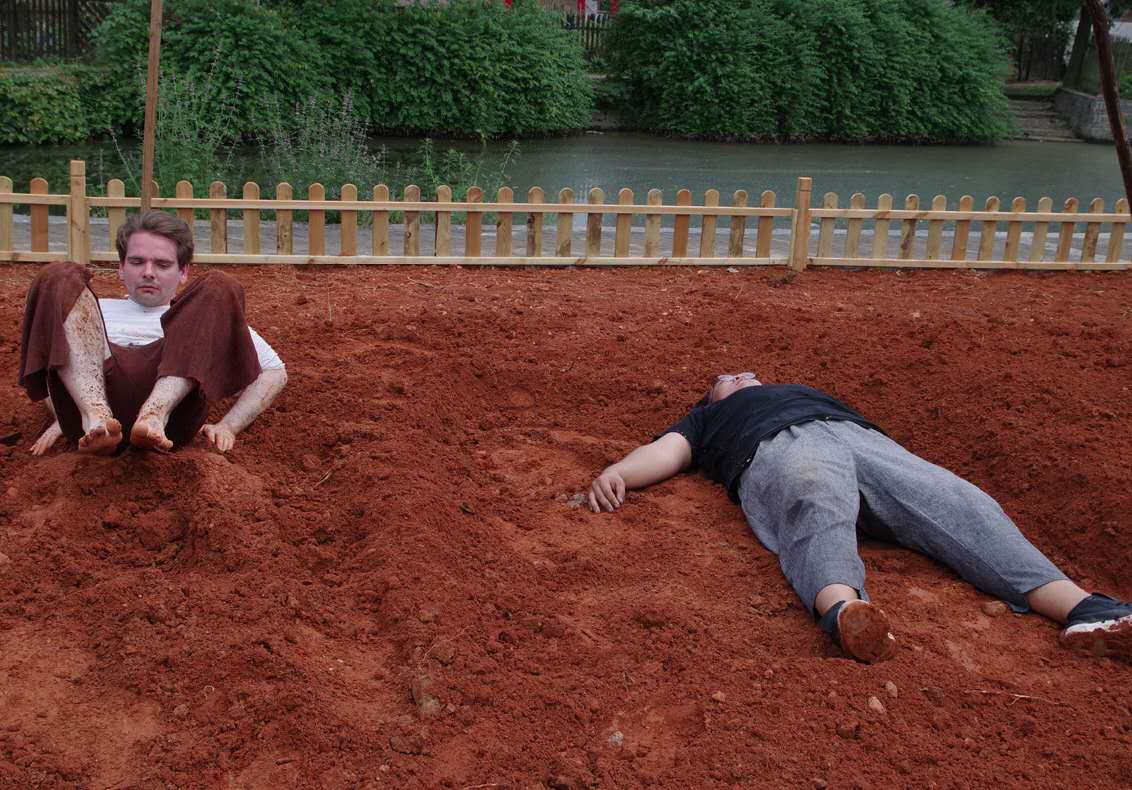
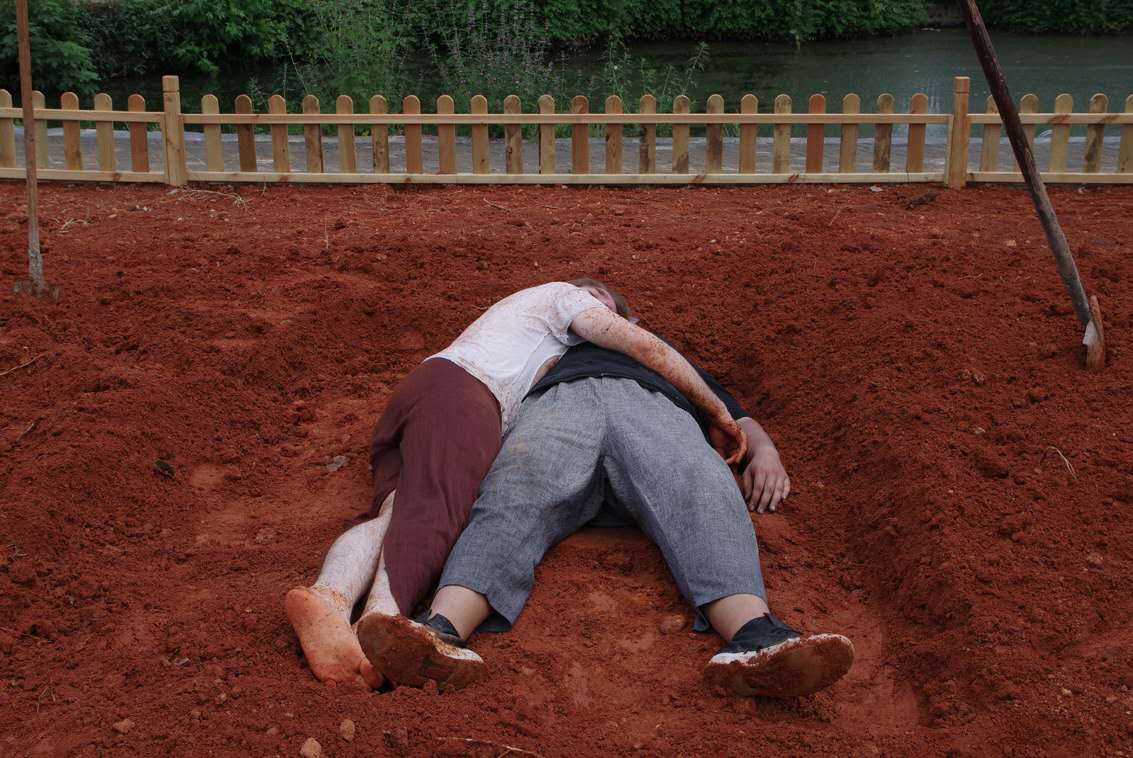
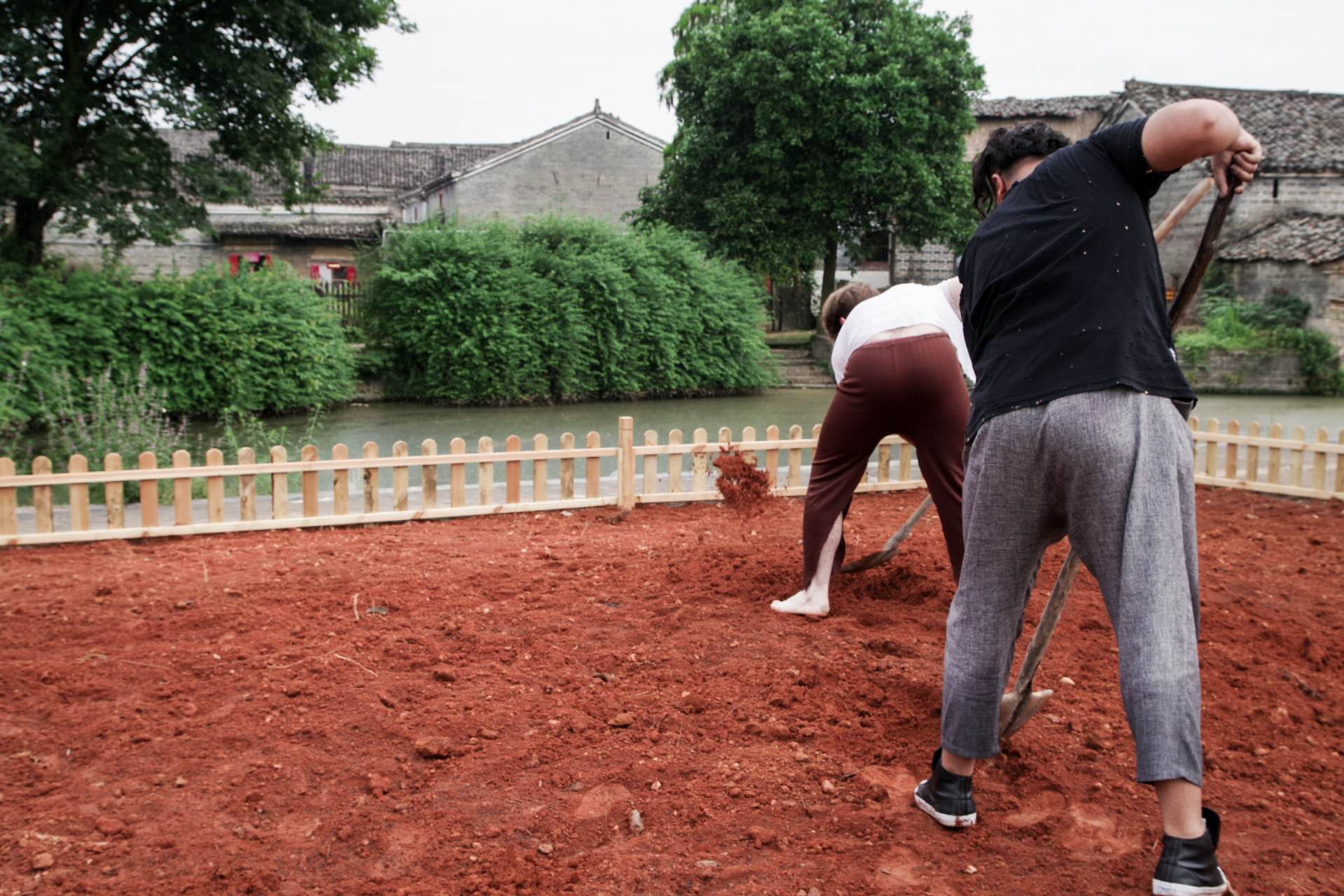
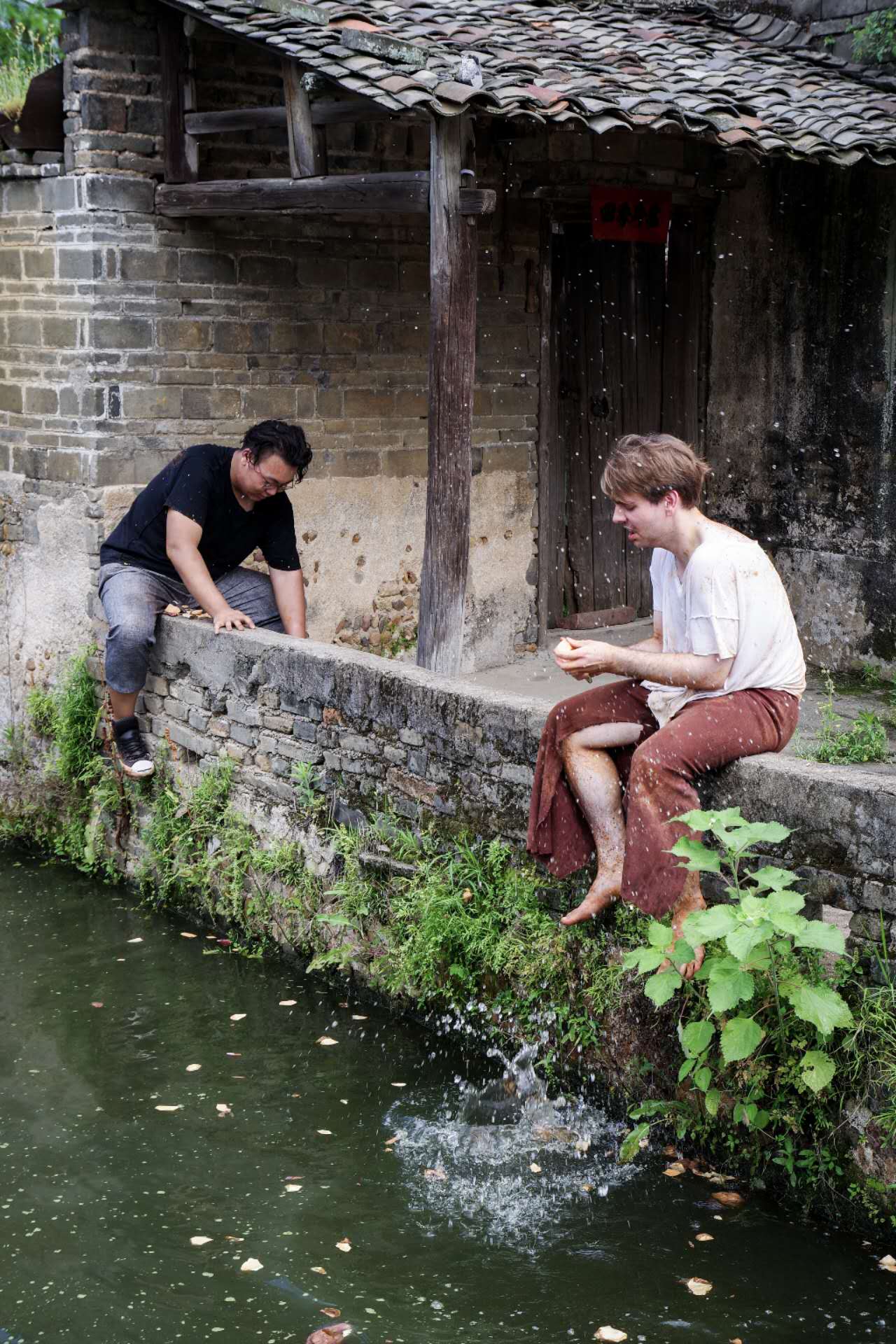
In this performance, we focused on a fenced-off plot of red soil in the village’s center. Together, we loosened the compacted ground, digging feverishly with shovels in a rhythm that oscillated between urgency and panic. Occasionally, we unearthed fragments of roots and grasses. These remnants of life evoked a fleeting sense of discovery, as though we had uncovered a buried treasure within this desolate terrain. In an act of desperate hope, we immediately placed these plant fragments into our mouths, chewing them as though trying to extract sustenance. However, the bitter reality of their inedibility quickly turned this gesture into one of frustration, forcing us to spit them out. As the performance progressed, the act of digging lost its rational purpose, devolving into a visceral expression of hope and despair. We began clawing at the soil with our hands, throwing it into the air, our movements driven by a primal need rather than logical intent. Exhaustion set in quickly, yet the search continued—a struggle for survival, truth, and meaning. Finally, we collapsed onto the red earth, spent and defeated. Around us, the shovels stood upright like gravestones, serving as silent witnesses—both a protest against history and a gesture of empathy for those who have endured and continue to endure its consequences.
Land has always been central to production and power relations in Chinese history. The story of China can be seen as one of perpetual land redistribution under shifting regimes. Today, the land belongs to the state and serves as one of its most significant revenue sources. This dynamic has fostered a system where a “rich state, weak people” paradox accurately describes the lives of many rural communities. In Meibei, poverty shapes every aspect of existence: agriculture remains unmechanized, and livelihoods depend on exhausting manual labor. Against this backdrop, our artistic intervention sought to unearth the layers of history embedded in the land and examine the complex relationships between people, sustenance, and soil.
The red earth of Meibei operates as a multilayered symbol in this performance. On one level, it embodies the region’s physical poverty and historical violence, linking the blood-red river of the “Red Terror” with the soil’s infertile hue. On another level, the red earth becomes a metaphor for the enduring struggles of those who live and labor upon it. The actions in Sweet Earth—digging, chewing, and collapsing—mirror the cyclical despair and resilience of these communities. Digging represents the search for truth, both historical and existential; chewing signifies an attempt to find nourishment in a barren reality; collapsing reflects the exhaustion of hope in the face of insurmountable hardship. These actions, though rooted in the local context of Meibei, resonate universally as a critique of the erasure of marginalized histories and the enduring power imbalances tied to land ownership.
This work not only engages with the physicality of the earth but also interrogates its symbolic, historical, and ideological dimensions. Through our performance, we sought to reactivate the land as a site of inquiry and resistance, drawing attention to its dual role as both a material resource and a vessel of memory. The act of intervening artistically in such a space creates a platform for dialogue, allowing us to question the relationships between history, power, and survival. By physically engaging with the soil, we transformed it into more than a passive witness—it became an active participant in the performance, embodying both the weight of history and the resilience of those who endure it.
From a theoretical perspective, Sweet Earth can be interpreted as a response to the tension between the material and symbolic roles of land in both local and global contexts. It critically engages with Marxist theories of production and ownership, particularly the idea of land as a central axis of power. Additionally, the performance draws on Foucault’s framework of power and space, examining how land operates as a tool of governance and control. The futile gestures of digging and chewing further echo Deleuze’s critique of capitalist flows, highlighting the cyclical dispossession and labor tied to land. Ultimately, Sweet Earth offers a multidimensional reflection on the intersections of labor, history, and ideology, revealing the profound complexities of human relationships with the land they inhabit.